Key points
- Secretary of State Marco Rubio said on 13 November that sanctions and a naval blockade have made further direct strikes on Iran unnecessary.
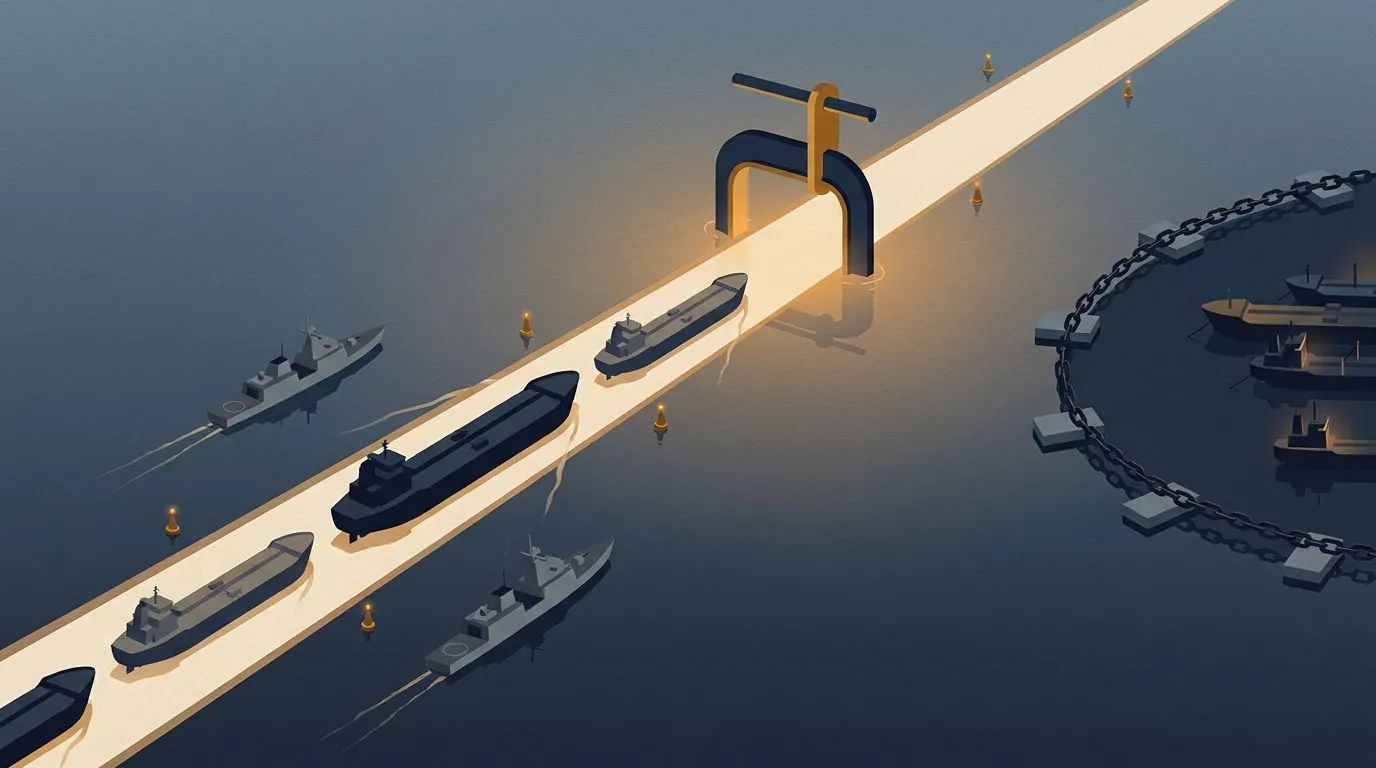
- Washington is keeping the strait open with warship escorts along a southern route near Oman, a blockade of Iranian ports and Task Force Iron Gate on overland and Caspian smuggling.
- Transits through the escorted corridor run at 32 to 34 ships a day, against a prewar average of 138, according to the Joint Maritime Information Center.
- Iran's IRGC and Artesh navies claimed tankers hit mines on 13 and 14 November, but no independent maritime body has confirmed the explosions.
- Allied basing, funding for naval operations and the legal basis for secondary sanctions remain unresolved.
Marco Rubio said on 13 November that further direct US military strikes on Iran are unnecessary, arguing that sanctions and a naval blockade have inflicted enough economic damage on Tehran's government. He was speaking at the Federalist Society National Lawyers Convention in Washington, according to accounts of his remarks published by the Times of Israel and Middle East Eye.
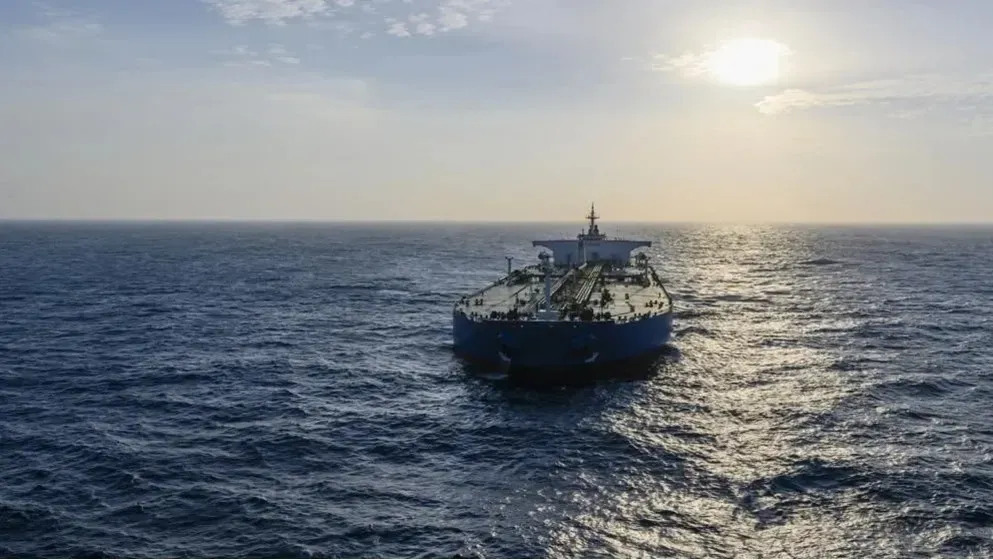
The statement is the clearest public description yet of how Washington intends to keep the Strait of Hormuz open now that the air campaign has paused. The narrow waterway at the mouth of the Gulf carries roughly a fifth of the world's seaborne crude oil. Policing it now rests on three things: warship escorts for commercial tankers along a route near Oman, a blockade of Iranian ports, and enforcement against overland and Caspian smuggling.
What Rubio said, and to whom
Rubio's remarks reinforced President Donald Trump's declaration earlier in the week that active conflict is "militarily effectively over", Roya News reported. Rubio said the core strategic objective remains preventing Tehran from developing a nuclear weapon, according to Middle East Eye's account of the appearance.
He gave G7 counterparts in Paris the same message on 10 November, saying Washington would rely on economic operating costs rather than resumed major air operations, Iran International reported. US Central Command has also offered a bounty of up to $20 million for intelligence on Iranian nuclear sites, equipment or personnel.
The pause in offensive air operations followed mediation appeals from regional states. Trump met Qatari Prime Minister Sheikh Mohammed bin Abdulrahman Al Thani at the White House on 9 November and kept the naval blockade in place, according to the Deccan Chronicle.
How the escorted corridor works
The military's substitute for sustained air cover is a convoy corridor along a southern route close to Omani territorial waters. CENTCOM said on 27 August that it had finished clearing mines from designated transit corridors, and the US Navy confirmed regular escorted convoys for commercial tankers from 6 September, according to a Middle East Eye explainer on how the corridor, insurance and freight costs interact.
The blockade itself dates from 13 April, when the US formally targeted Iranian oil terminals and ports. On 7 November CENTCOM widened enforcement by setting up Task Force Iron Gate, intended to interdict Iranian ground transport and Caspian Sea smuggling routes, CBS News reported.
Traffic is still about a fifth of prewar levels
The escorts are working, but on a much smaller scale than before the war. The Joint Maritime Information Center puts prewar traffic through the strait at 138 ships a day. In mid-November, the US-facilitated southern corridor was handling 32 to 34 transits a day, roughly 20% to 25% of the baseline.
The same monitoring body logged 177 maritime security incidents between 1 March and 9 November. The International Maritime Organization counts 24 to 25 commercial seafarers killed in the conflict zone since February.
Iran's mine claims and the information fight
Iran's Islamic Revolutionary Guard Corps Navy and the conventional Artesh Navy said on 13 November that a tanker carrying liquefied natural gas had struck a mine in the eastern strait, a claim carried by Anadolu Agency. On 14 November, Iranian state media and the IRGC said further tankers had caught fire after hitting mines in lanes outside the escorted route, according to the Jerusalem Post. Iran has made similar claims before.
No independent maritime monitoring body, including the UK Maritime Trade Operations office or the JMIC, has confirmed new mine explosions, and no shipowner has publicly verified the accounts. The Institute for the Study of War assessed that Tehran's mine claims are largely an information operation intended to discourage commercial vessels from using the US-escorted southern corridor.
CENTCOM separately rejected Iranian claims that drones struck US radar facilities in Bahrain on 13 November, saying it had downed two drones with no damage to infrastructure.
Tehran's public position is that it controls the strait. It has demanded the complete removal of the naval blockade, the lifting of sanctions and compensation for war damage before it will allow unrestricted commercial traffic, and it has threatened ships that use US escorts or run without Automatic Identification System transponders in restricted zones.
Why the throughput figure matters
Hormuz remains the main maritime route for about 20% to 25% of global seaborne crude trade. With only about 33 vessels a day getting through, the cost of moving oil and gas out of the Gulf is being set less by the threat of airstrikes than by mine risk and insurance terms.
Shifting from kinetic operations to maritime interdiction has lowered the headline war premium priced into Brent crude, but war-risk surcharges and insurance exclusions mean freight costs have not returned to prewar levels. Tanker operators must weigh the risk of drone or mine strikes against those surcharges, which is one reason volumes remain capped. Energy importers and currency markets remain exposed to any renewed escalation.
What to watch next
Three questions will determine whether the escort model holds. The first is allied support: whether Saudi Arabia, the United Arab Emirates and Kuwait provide basing and logistics for long-term convoy policing without formal US security guarantees. Trump has called for allies to compensate Washington for naval operations, and no funding arrangement has been announced.
The second is enforcement reach. Task Force Iron Gate relies on secondary sanctions and border interdiction, and it is not clear the administration has enough international diplomatic backing to sustain that without United Nations authorisation.
The third is whether Iran can lay mines covertly in southern Hormuz waters using rocket-laid or unmanned underwater systems, which would test the cleared corridors faster than escorts can respond. Qatar and Oman are still trying to broker an interim framework to stabilise the sea lanes, in effect freezing the current arrangement rather than resolving it.
For now, the US position is that economic pressure replaces air power. The measure of whether that works is not the state of the Iranian economy, which is largely closed to outside inspection, but the daily count of ships willing to sail under escort.
Why it matters
About a fifth of the world's seaborne crude oil normally passes through the Strait of Hormuz. If escorted convoys cannot lift throughput much above 33 ships a day, war-risk insurance and freight costs stay elevated, feeding into pump prices and inflation in energy-importing economies from Japan to Europe. The shift also tests whether the US can police a strategic waterway through naval presence and sanctions alone, without the air cover that kept Iranian shore defences suppressed.
What we know
- Rubio said in Washington on 13 November that economic pressure makes further strikes on Iran unnecessary, and gave G7 ministers the same message in Paris on 10 November.
- The US paused new air operations after Qatari mediation, with Trump meeting Sheikh Mohammed bin Abdulrahman Al Thani on 9 November while the naval blockade stayed in place.
- CENTCOM completed mine clearance of designated transit corridors on 27 August and the Navy began regular escorted convoys on 6 September.
- Task Force Iron Gate was established on 7 November to interdict Iranian ground transport and Caspian Sea smuggling routes.
- Commercial traffic through the strait stands at roughly 20% to 25% of prewar levels, with 177 maritime security incidents logged between 1 March and 9 November.
What we don't know yet
- Whether any tanker actually struck a mine on 13 or 14 November; no independent monitoring body or shipowner has confirmed the Iranian claims.
- Whether Saudi Arabia, the UAE and Kuwait will provide basing and logistics for long-term convoy operations without formal US security guarantees.
- Whether the administration has enough international backing to enforce secondary sanctions and border interdiction without UN authorisation.
- How Washington would detect and stop covert mining by rocket-laid or unmanned underwater systems in southern Hormuz waters.
- Whether Qatar and Oman can convert their mediation into a workable interim framework covering the sea lanes.
Market and economic impact
- Brent crude war premiumDownward pressure
- The shift from airstrikes to maritime interdiction has lowered the headline risk premium, though mine hazards keep it from disappearing.
- Tanker freight and war-risk insuranceMixed
- Surcharges and insurance exclusions persist, so freight costs remain above prewar levels even as strike risk falls.
- Gulf oil export capacityDownward pressure
- Throughput of about 33 vessels a day against 138 prewar leaves exports well below normal for Gulf producers reliant on Hormuz.
- Energy importer inflationUpward pressure
- Sustained higher shipping and insurance costs pass through to landed crude prices for importers in Asia and Europe.
Sources
- 1.timesofisrael.com, vertexaisearch.cloud.google.com
- 2.royanews.tv, en.royanews.tv
- 3.middleeasteye.net, vertexaisearch.cloud.google.com
- 4.iranintl.com, iranintl.com
- 5.deccanchronicle.com, vertexaisearch.cloud.google.com
- 6.cbsnews.com, vertexaisearch.cloud.google.com
- 7.aa.com.tr, vertexaisearch.cloud.google.com
- 8.jpost.com, vertexaisearch.cloud.google.com
- 9.understandingwar.org, vertexaisearch.cloud.google.com
- 10.middleeasteye.net, middleeasteye.net
- 11.hurriyetdailynews.com, hurriyetdailynews.com