Japan scrambled fighter jets and lodged a strong diplomatic protest with Moscow on Tuesday, November 17, after two aircraft believed to be Russian entered Japanese territorial airspace near Okinoshima, an island off Fukuoka prefecture. The incident adds to tensions in northeast Asia as Russian military aircraft are also reported near Taiwan and as leaders prepare to gather in China for an Asia-Pacific summit.
The incursion, minute by minute
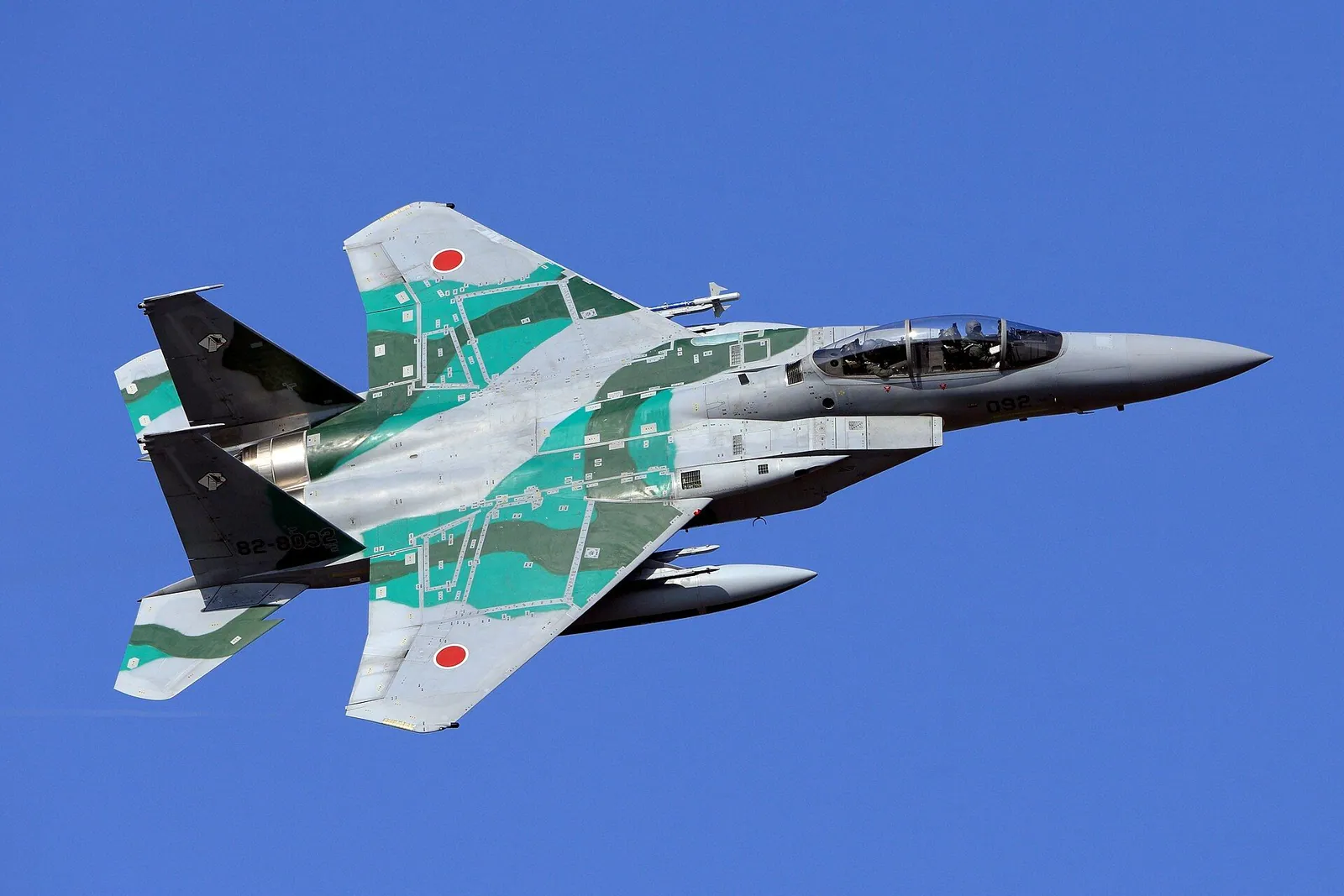
Japan's Defense Ministry said the first suspected Russian aircraft crossed into Japanese airspace northwest of Okinoshima at approximately 4:07 a.m. local time and remained until 4:10 a.m. A second aircraft entered at approximately 4:09 a.m. and left at 4:12 a.m. The intervals overlap; the ministry did not describe a single plane staying for the entire five-minute span.
The Air Self-Defense Force scrambled fighters from its western command and issued notifications and warnings. The ministry said the aircraft subsequently passed through the Tsushima Strait, flew between Yonaguni Island and Taiwan, and continued into the Pacific Ocean. Japan did not publicly identify the exact aircraft models in the initial accounts. The government described their Russian identity as an assessment, rather than a publicly demonstrated identification.
Defense Minister Shinjiro Koizumi said Japan had delivered a very strong protest to Russia and demanded steps to prevent another incident. Chief Cabinet Secretary Minoru Kihara also called the episode a serious violation of sovereignty and a threat to security. Reuters and the Associated Press independently reported Tokyo's response on Tuesday.
Why territorial airspace matters
An air-defense identification zone is not the same as sovereign airspace. Governments may ask aircraft approaching their territory to identify themselves within an ADIZ, but the zone can extend over international airspace. Territorial airspace, by contrast, covers a state's land and territorial waters, generally extending 12 nautical miles from its coast. Unauthorized entry into that airspace is a much more serious claim than a flight through an identification zone.
Japan says the two aircraft crossed territorial airspace above the waters northwest of Okinoshima. The location matters because the Tsushima Strait is a strategic passage between the Korean Peninsula and Japan, connecting regional seas. The subsequent route toward the waters between Yonaguni and Taiwan placed the aircraft near another sensitive area, though Japan did not say the aircraft entered Taiwan's sovereign airspace.
Separate reports from South Korea and Taiwan
South Korea's military said several Russian military aircraft entered its air-defense identification zone over waters between Korea and Japan on Monday, November 16. Seoul scrambled its own fighters, but explicitly said its territorial airspace had not been violated. That distinction should not be lost when describing a series of regional military flights.
Taiwan's defense ministry also reported detecting two Russian military aircraft off its eastern coast on Tuesday. According to Reuters, the aircraft passed through airspace east of the island and exited Taiwan's air-defense identification zone south of Taitung. Taiwan said it monitored and responded to the activity. These reports suggest a wider regional flight pattern, but the available official statements do not establish the aircraft's mission or prove that the movements were coordinated as a deliberate provocation.
Diplomatic backdrop: APEC and the Kuril dispute
The incident occurred as Russia's President Vladimir Putin was expected in Shenzhen for the Asia-Pacific Economic Cooperation gathering. A planned meeting involving Putin, China's Xi Jinping and US President Donald Trump has drawn international attention. The timing is notable, but there is no verified evidence that the airspace incursion was ordered to influence the summit.
Japan and Russia have longstanding disputes over islands controlled by Moscow and claimed by Tokyo, known in Japan as the Northern Territories and internationally as part of the Kuril chain. The disagreement has prevented a formal post-World War II peace treaty. Relations have worsened further over Russia's war in Ukraine, a Japanese journalist's detention on espionage allegations in Russia, and Russian measures affecting Japan Tobacco subsidiaries. Tokyo has protested those actions; the allegations and disputes should be distinguished from the verified facts of Tuesday's flight.
Japan's Defense Ministry said the last confirmed violation of its airspace by Russian aircraft occurred near Rebun Island in Hokkaido in September 2024. Tuesday's event is therefore unusual, although Russian military flights in international airspace near Japan are not themselves uncommon or necessarily unlawful.
What remains unknown
The ministry's initial statement did not establish the types of aircraft, their orders, whether they were armed, or why they followed that route. Moscow's detailed response to the latest Japanese protest was not available in the reports reviewed at publication time. No collision, firing of weapons, or casualties were reported in those accounts. These limits are important: the confirmed news is the Japanese government's documented response to a reported incursion, not evidence of an impending armed conflict.
The next developments to watch are whether Tokyo releases aircraft imagery or tracking details, whether Moscow responds formally, and whether defense officials in Japan, South Korea and Taiwan provide additional information about the flights. For regional security, the central concern is the risk of miscalculation when aircraft from rival militaries operate in close proximity.
Sources
- 1.Japan Defense Ministry statement reproduced by FNN, 17 November 2026, fnn.jp
- 2.Associated Press, 17 November 2026, apnews.com
- 3.Reuters: Tokyo protests suspected Russian aircraft, 17 November 2026, reuters.com
- 4.Reuters: Taiwan detects Russian military aircraft, 17 November 2026, reuters.com
- 5.Jiji Press, 17 November 2026, jen.jiji.com