Indonesia's market-governance dispute is no longer just a debate about stock-index labels. A Reuters report on November 17 describes a sharp decline in the rupiah, equity prices and foreign investment appetite, as MSCI considers removing Indonesia from its emerging-market benchmarks. The immediate public-policy question is whether promised transparency reforms will change how ownership and trading are monitored, and who bears the costs if they do not.
What MSCI has actually decided
In an October 15 statement, index provider MSCI opened a consultation on moving Indonesian indexes from Emerging Market to Standalone Market status. It has not yet made a final reclassification. The consultation runs through April 30, 2027, with a decision expected by the end of June 2027. Its existing freeze on certain Indonesian index changes remains in place.
MSCI said international investors continued to flag opaque ownership, concentrated holdings, suspected coordinated trading and insufficient evidence that enforcement reforms were working consistently. These are concerns attributed to market participants and the index provider; they are not judicial findings that every affected company manipulated shares.
A fresh warning from financial markets
Reuters reported on November 17 that the rupiah had lost roughly 14% against the dollar since President Prabowo Subianto took office, reaching 18,285 per dollar, while Indonesia's benchmark share index had fallen around 38% in 2026. It reported net foreign equity outflows of $5.36 billion and ten-year government bond yields near six-year highs. These figures are market snapshots from the report, not forecasts and not proof that a single government decision caused each movement.
A weaker currency can increase the rupiah cost of imported goods, energy and dollar-denominated obligations. Higher sovereign borrowing yields can make financing more expensive. But the eventual impact on household prices and the budget depends on global conditions, domestic policy and how long market pressure lasts. It would be misleading to attribute every price change directly to MSCI.
Reforms announced, results questioned
MSCI's own release acknowledges reforms announced by the Financial Services Authority (OJK), Indonesia Stock Exchange (IDX) and securities depository KSEI: enhanced disclosure of shareholders above 1%, more granular investor categories, high shareholding concentration reporting and a roadmap to raise minimum free float to 15%. The central dispute is not whether announcements exist, but whether implementation and enforcement produce demonstrable improvements across the market.
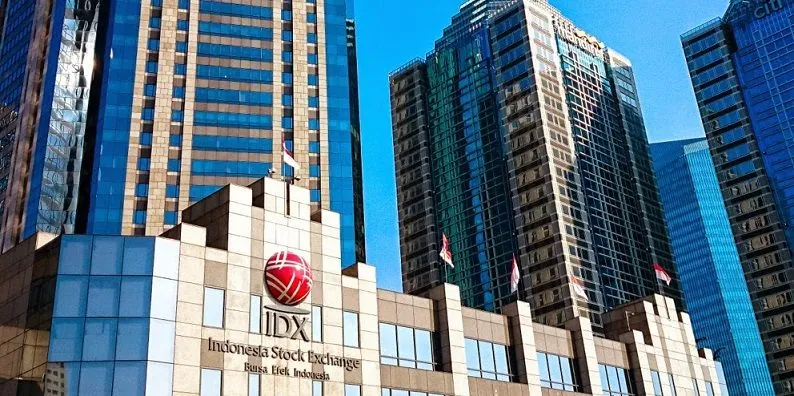
IDX's October 16 official response said it respected MSCI's independent methodology and would seek clarification. It stressed that the proposal remains a consultation, not a final downgrade. That distinction matters: the potential consequences are serious, but the outcome is not settled.
On November 10, Reuters reported that IDX removed a Rp5 trillion market-capitalisation threshold from its screening of concentrated ownership. The change potentially widens scrutiny, although the actual effectiveness depends on published criteria, enforcement decisions and follow-through.
Who could be affected?
If the proposed reclassification proceeds, index-tracking investors may need to sell Indonesian shares that no longer qualify for their benchmarks. Reuters cited a Goldman Sachs estimate of approximately $5.6 billion in possible additional passive outflows. That is a scenario estimate, not money already withdrawn or a guaranteed outcome.
Listed companies could face a higher cost of raising capital, while pension funds, retail investors and workers with indirect stock exposure could experience market volatility. Public finances may also be affected if borrowing costs stay elevated. Conversely, greater disclosure and credible enforcement could improve market fairness and reduce the advantage of investors with privileged information.
There is a trade-off in reform design. Raising free-float requirements may improve liquidity and broaden ownership, but large share sales can create temporary supply pressure. Stronger ownership verification and penalties for manipulation address a different problem: whether prices reflect genuine, transparent trading. Neither a new percentage target nor a public-relations campaign alone proves that problem has been solved.
Political dispute versus documented evidence
The dispute has become political. In a report last week, the Financial Times quoted presidential adviser Hashim Djojohadikusumo criticizing the severity of MSCI's threatened action while acknowledging the need for transparency and enforcement. The government's economic ambitions and public spending priorities are relevant to investor confidence, but attributing the market slump solely to one politician, one programme or foreign pressure would go beyond the evidence available.
The stronger test is documentary: how many companies comply with beneficial-ownership disclosure; which manipulation findings result in enforceable sanctions; whether concentrated holdings are independently verified; and whether international investors observe sustained change. The public deserves measurable results rather than competing assertions of confidence or hostility.
What happens next
Watch for OJK and IDX enforcement records, MSCI's consultation updates, the treatment of companies with high ownership concentration and the June 2027 classification decision. A proposal to downgrade is not an enacted downgrade; suspected trading coordination is not a criminal conviction; and estimated capital outflows are not realized losses.
Indonesia has time to demonstrate improvements. Whether the reforms succeed will be judged not by the volume of announcements but by verifiable transparency, consistent enforcement and functioning markets.
Sources
- 1.Reuters, November 17, 2026: Indonesia on a slippery slope as market and political risks mount, reuters.com
- 2.MSCI official consultation announcement, October 15, 2026, ir.msci.com
- 3.IDX official response, October 16, 2026, idx.co.id
- 4.Reuters, November 10, 2026: IDX ownership screening change, reuters.com
- 5.Financial Times, November 2026: presidential adviser responds to MSCI, ft.com