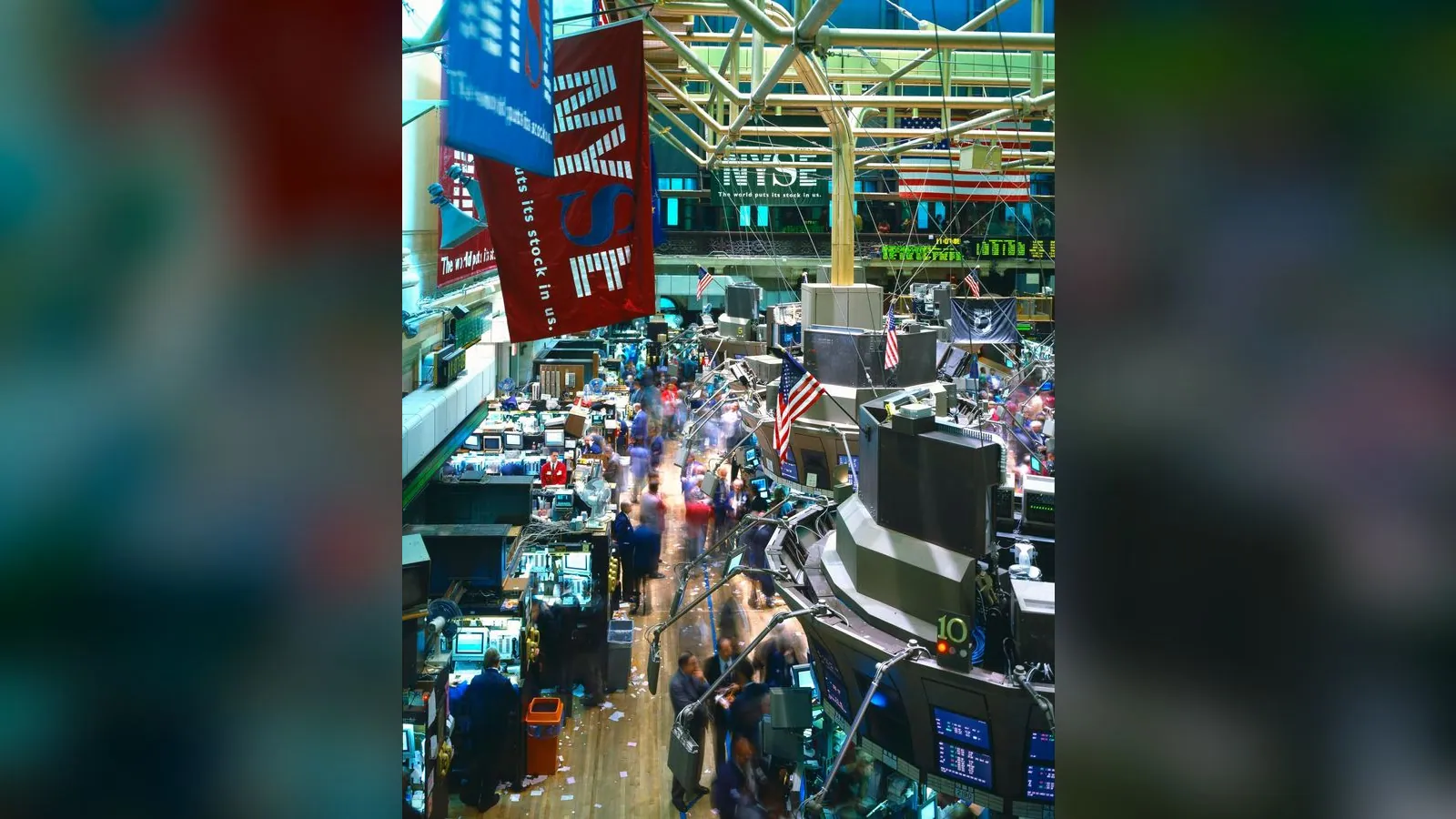
U.S. stock markets closed sharply lower on Friday, November 20, 2026, as investors sold shares linked to artificial intelligence and the retreat spread to major indexes. The S&P 500 fell 3.7% to 6,910.39, the Nasdaq Composite dropped 5.3% to 22,617.73 and the Dow Jones Industrial Average lost 1.9% to 48,147.33, according to Associated Press closing data.
Both the S&P 500 and Dow finished more than 10% below their recent record closing highs. That meets the widely used definition of a market correction, although a correction is not the same thing as an economic recession. The Nasdaq lost approximately 10% for the week, its largest weekly decline since 2020 according to Reuters, and turned negative for the year.
Chipmakers lead the retreat
Nvidia fell about 14% in Friday's session, while AMD and Micron each declined more than 13%, AP reported. Reuters said the broader semiconductor index dropped 11% and Nvidia lost approximately 23% across the week. Such declines describe market valuations, not corresponding changes in company revenue or profits.
The selling followed the much-watched public-market debut of AI developer Anthropic. Its stock fell roughly 9% on Friday after gaining on Thursday. Investors had looked to the listing as a possible test of confidence in AI-related businesses, but its performance alone cannot explain all the losses across technology, industrial and broader equity markets.
Questions about the cost of AI
Reuters reported several concerns raised by investors and market professionals, including expensive valuations, uncertain returns on data-center and computing investments, inflation and the outlook for interest rates. The market is reassessing how much future growth is already reflected in current share prices.
The rapid expansion of AI requires spending on chips, electricity, buildings, networking and software. That spending can create revenue for suppliers long before the eventual purchasers establish whether the new services produce sustainable profits. The distinction matters when investors value companies based on expectations years into the future.
Reuters also reported an accounting investigation involving Nvidia. The existence of an investigation should not be confused with a finding of misconduct, and the report is only one of several developments investors were considering.
Volatility spreads beyond technology
Reuters said Wall Street's VIX volatility gauge jumped sharply on Friday, while the yield on the benchmark 10-year U.S. Treasury note declined. Together with the fall in major stock indexes, these indicators illustrated a broad reassessment of risk rather than an isolated move in a single stock.
The AP reported that the Russell 2000 index of smaller companies also fell, by 2.8%, to 2,581.79. The Dow's decline showed that selling was not confined to the Nasdaq, which has a particularly heavy concentration of technology businesses.
Despite the scale of the drop, Reuters interviewed market professionals who argued that the long-term demand for AI remains intact. Others expressed concern that prices and spending plans may have moved ahead of verifiable earnings. These are forecasts and judgments, not proof either that an AI bubble has burst or that a rebound is assured.
What investors will watch next
The next tests include company earnings, capital expenditure plans, borrowing costs and inflation data. Investors will be looking for evidence that AI products generate enough cash to justify costly infrastructure, while also watching whether financing conditions make projects harder to complete.
For international readers, U.S. technology stocks matter because they are widely held through global investment funds and can influence financing sentiment elsewhere. The prices in this report refer specifically to the November 20 U.S. close, not live market prices on November 21.
Sources: Associated Press market report; AP index figures; Reuters market analysis.