Key points
- Prabowo pledged on 20 October 2024 that Indonesia would be self-sufficient in food within four to five years at the latest.
- He declared food self-sufficiency achieved on 7 January 2026, based mainly on ending rice imports.
- BPS says Indonesia imported 3.93 million tonnes of sugar in 2025; soybean imports were about 7.9 to 8.6 million tonnes and wheat 11.76 million tonnes.
- Bapanas says imports are only about 5.1 percent of needs for 11 staples, a list that excludes wheat.
- NewsWLD rates the claim of delivery misleading; the promise is marked disputed in our tracker, with an October 2029 deadline.
The promise: In his inauguration speech to the People's Consultative Assembly (MPR) on 20 October 2024, President Prabowo Subianto said: "I have studied this with the experts who assist me. I am confident that within four to five years at the latest we will be self-sufficient in food. We are even ready to become the world's food barn" (full speech, ANTARA). In the same speech he defined the goal: "We must be able to produce and meet the food needs of all the people of Indonesia," adding that "we must not depend on food sources from abroad."
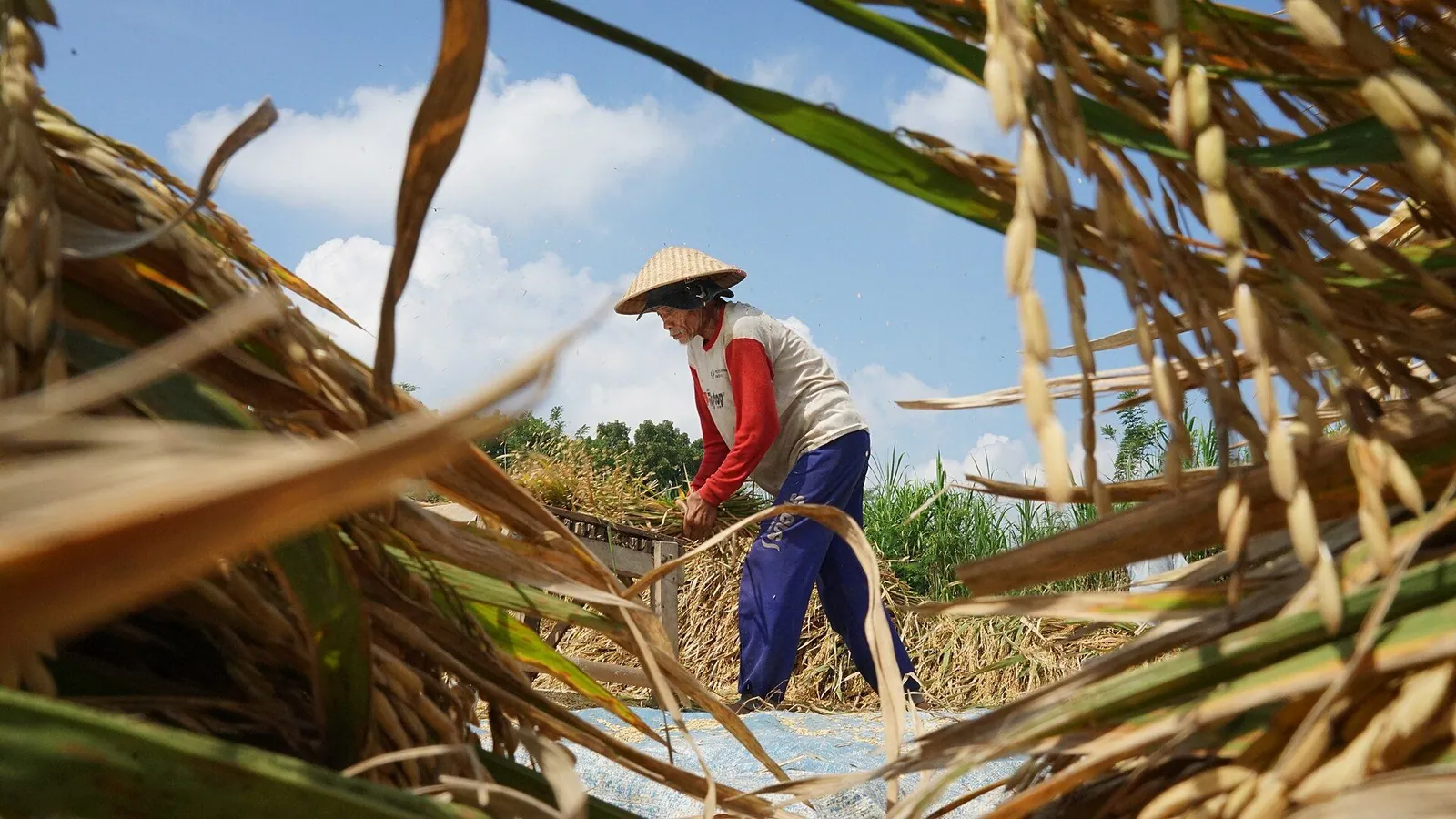
The claim of delivery: At a rice harvest in Karawang on 7 January 2026, Prabowo said: "On Wednesday 7 January 2026, I, Prabowo Subianto, President of the Republic of Indonesia, hereby announce that food self-sufficiency has been achieved," as quoted by DW Indonesia from the Presidential Secretariat's broadcast. The announcement rested mainly on the end of rice imports and a rice reserve surplus.
Our verdict: Misleading as a claim that the promise has been kept. Official and industry data show Indonesia still imported millions of tonnes of staple foods in 2025, including 3.93 million tonnes of sugar according to Statistics Indonesia (BPS) and close to 8 million tonnes of soybeans, while wheat imports, which cover all national needs according to CORE Indonesia, came to 11.76 million tonnes. What has been reached is rice self-sufficiency, which experts note Indonesia also recorded in several earlier years. In the NewsWLD promise tracker the pledge is marked disputed: its deadline is October 2029, and the government's own measure of success differs from the plain meaning of the words Prabowo used.
How the target moved
Prabowo's deadline has shifted several times. On 21 November 2024 Coordinating Food Minister Zulkifli Hasan said the target had been brought forward from 2028 to 2027, as the President had announced at the G20 and APEC (Bisnis.com). On 22 January 2025 Prabowo told his cabinet the four-year target could be reached "at the end of 2025, at the latest 2026," while the government stopped imports of several commodities (Bisnis.com). Less than a year later he declared the goal achieved.
What the import data show
1. Sugar. BPS deputy head Sonny Harry Budiutomo Harmadi told House Commission VI on 8 April 2026 that Indonesia imported 3.93 million tonnes of sugar (HS code 1701) in 2025. Domestic white sugar production rose 8.22 percent to 2.67 million tonnes. "In general our domestic supply has improved, but we still depend on imports," he said (Kompas.com).
2. Soybeans and garlic. DW's fact check cited BPS data showing 2025 imports of 7,928,795 tonnes of soybeans, 466,087 tonnes of garlic and 63,261 tonnes of chilli (DW Indonesia). Bisnis.com, in a report on 18 May 2026, gave a higher soybean figure of 8.61 million tonnes (Bisnis.com). Either way, CORE Indonesia researcher Eliza Mardian told Bisnis that imports cover about 90 percent of domestic soybean needs, 95 percent of garlic, about 60 percent of sugar and about 54 percent of beef and buffalo meat.
3. Wheat. The same Bisnis report put 2025 wheat imports at 11.76 million tonnes, the largest of any food commodity. According to Eliza Mardian, all of Indonesia's wheat needs are met from abroad. The report also listed 982,000 tonnes of corn and 454,000 tonnes of rice imported in 2025, without specifying the type of rice.
What experts say
Agricultural scientists and food-rights groups interviewed by DW said the government had narrowed "food" to "rice". Said Abdullah of the People's Coalition for Food Sovereignty (KRKP) said soybeans, sugar and meat are still partly imported, so food self-sufficiency "has not been reached". IPB University professor Dwi Andreas Santosa said rice self-sufficiency is not new: Indonesia also did not need to import rice in 2019, 2020, 2021 and 2022. Tejo Wahyu Jatmiko of the Alliance for Village Prosperity said farmers on the ground were still waiting for results and that rice prices remained high (DW Indonesia).
Indonesian law does not define food self-sufficiency. Law 18/2012 on Food defines food broadly as anything from biological sources, including farm, plantation, forestry, fishery and livestock products, DW noted.
The government's side
The National Food Agency (Bapanas), headed by Andi Amran Sulaiman, argues the import share is small. On 25 April 2026 he said imports of three strategic staples, soybeans (2.6 million tonnes), garlic (600,000 tonnes) and ruminant meat (350,000 tonnes), totalled about 3.5 million tonnes, or about 5.1 percent of the 68.7 million tonnes a year needed for 11 staple foods, and that domestic production of those 11 staples of 73.7 million tonnes fits the Food and Agriculture Organization (FAO) definition of self-sufficiency (Bisnis.com). Bapanas's soybean import figure for that list is far below the 7.9 to 8.6 million tonnes reported for 2025 as a whole; the agency did not explain the basis in the report, and its list of 11 staples leaves out wheat.
Accountability gap
The promise Prabowo made in 2024 was to meet "the food needs of all the people of Indonesia" without depending on imports. The declaration of 7 January 2026 measured success against a narrower basket chosen by the government, which excludes the country's largest food import. Until the government publishes the definition and the commodity-by-commodity data it used, the claim of delivery cannot be checked against the original promise.
What remains unknown
Which commodities and thresholds the government used for its January 2026 declaration. Why Bapanas's soybean import figure differs from BPS-based figures. Whether imports of sugar, soybeans and garlic will fall before the October 2029 deadline. Follow the pledge in the NewsWLD promise tracker.
Sources
- 1.Pidato lengkap Presiden RI Prabowo Subianto (ANTARA), antaranews.com
- 2.Cek Fakta: Benarkah Indonesia Sudah Swasembada Pangan? (DW Indonesia), dw.com
- 3.Indonesia Masih Impor Gula 3,93 Juta Ton selama 2025 (Kompas.com), money.kompas.com
- 4.Sederet Komoditas Pangan Indonesia yang Masih Dibeli Pakai Dolar AS (Bisnis.com), ekonomi.bisnis.com
- 5.Prabowo Minta Swasembada Pangan Dipercepat Jadi 2027 (Bisnis.com), ekonomi.bisnis.com
- 6.Resmi! Prabowo Teken Empat Aturan Baru Demi Swasembada Pangan (Bisnis.com), ekonomi.bisnis.com