Key points
- Presidential, vice-presidential, DPR, DPD, DPRD and regional head candidates need at least senior high school under Law 7/2017 (Articles 169r, 182e, 240(1)e) and Law 10/2016 (Article 7(2)c).
- Ministers have no education requirement under Article 22(2) of Law 39/2008; village heads need junior high school under Article 33d of the Villages Law as amended in 2024.
- The Constitutional Court rejected raising the bar to a degree in 2025; two 2026 petitions failed on procedure.
- Only about 9.5 percent of the 250,407 CPNS posts in 2024 were open to SMA or SMK graduates, by Analitica's tabulation of BKN data; the Religious Affairs Ministry offered none.
- A House working committee is studying education rules in a new elections bill targeted for March 2027; none of the proposals is law yet.
Update, 16 November 2026: We revised the headline, summary and analysis to add the national share of 2024 civil service posts open to high school graduates, about 9.5 percent, and the government's own description of the intake as aimed at university graduates. The earlier version stressed that the slogan "overreaches" without showing how small the high school share was. The verdict, partly true, is unchanged.
Verdict: partly true. Every row in the viral table of minimum education for Indonesia's elected offices matches the law in force on 16 November 2026. The slogan "the people must have a bachelor's degree" does not: civil service education rules are set job by job, and the 2024 intake did include high school posts, though only about one in ten.
The claim
Late on 15 November 2026 the Instagram account Lambe Turah posted a carousel headed "Publik pertanyakan standar pendidikan, rakyat harus S1, pejabat cukup SMA" ("The public questions education standards: the people must have a degree, officials need only high school"). It listed the minimum education to become president, vice president, minister, member of the House (DPR), the Regional Representative Council (DPD) or regional councils (DPRD), regional head and village head. It set this beside a sample of 2024 civil service (CPNS) openings at the Ministry of Religious Affairs that ask for a bachelor's degree, which the post itself described as a reference based on CPNS 2024 and not an official announcement. The post drew more than 27,000 likes within hours.
We treated the post as a lead and checked each row against the statute books, Constitutional Court (MK) rulings and recruitment announcements.
Row by row
President and vice president: senior high school. True. Article 169 letter r of Law 7 of 2017 on General Elections requires candidates to have "at least completed senior high school, madrasah aliyah, vocational school, madrasah aliyah kejuruan or another equivalent school". The MK refused to raise this to a bachelor's degree in Decision 87/PUU-XXIII/2025 and again on 29 September 2025 in Decision 154/PUU-XXIII/2025. The court said the bar is an "open legal policy" for lawmakers and that a degree rule would narrow the pool of candidates, Antara reported.
Minister: not set. True. Article 22(2) of Law 39 of 2008 on State Ministries lists six requirements: Indonesian citizenship, faith in God, loyalty to Pancasila, the constitution and the ideals of independence, physical and mental health, integrity and good character, and no prison sentence for a crime punishable by five years or more. None concerns education. Law 61 of 2024, which amended the ministries law, did not add one, according to Hukumonline's legal explainer updated in September 2026.
DPR, provincial DPRD and district DPRD members: senior high school. True. Article 240(1) letter e of the elections law sets the same high school floor for candidates to the House and to provincial and district councils. Decision 154/PUU-XXIII/2025 also covered this article. Two petitions in 2026 failed on procedure without a ruling on substance: the MK declared Case 124/PUU-XXIV/2026 inadmissible on 12 May 2026 because the petition was unclear, and declared Case 270/PUU-XXIV/2026 inadmissible on 12 August 2026 because the petitioner filed no evidence bearing duty stamps, the court reported.
DPD members: senior high school. True. Article 182 letter e of the elections law uses the same wording for DPD candidates, and Decision 154/PUU-XXIII/2025 upheld it.
Governors, regents, mayors and their deputies: senior high school. True. Article 7(2) letter c of Law 10 of 2016 on Regional Elections requires "at least senior high school (sekolah lanjutan tingkat atas) or equivalent". This article was also part of the failed 2025 petition.
Village head: junior high school. True. Article 33 letter d of Law 6 of 2014 on Villages, as rewritten by Law 3 of 2024, requires candidates to have "at least completed junior high school or equivalent". Village officials who serve under the head (perangkat desa) must have senior high school under Article 50(1) letter b of the same law.
CPNS sample at the Ministry of Religious Affairs: degree or diploma. Largely accurate. The ministry's 2024 intake, under announcement P-3103/SJ.B.II.1/KP/00.1/08/2024, offered 20,772 posts in 32 positions for graduates with a three-year diploma up to a doctorate, detikSulsel reported. Positions named in the post, such as public relations officer, legal analyst, computer administrator and policy analyst at the first "expert" grade, are degree-level jobs. The ministry's 2024 list did not include high school posts.
Where the slogan goes too far
"The people must have a degree" is not a rule. Civil service education requirements are set per position. In the same 2024 intake, the Law and Human Rights Ministry opened high school posts for prison guards and immigration examiners, according to its regional office, and 4,178 prison guard posts in total, while the Attorney General's Office opened 948 and the KPK secretariat 42, AyoJakarta reported.
Those posts were a small slice of the whole. Of the 250,407 posts in the 2024 national intake, 23,802, or about 9.5 percent, were open to SMA or SMK graduates, while 129,093, about 52 percent, required a bachelor's degree, according to Analitica's tabulation of formation data from BKN's SSCASN portal. When the intake opened, then Administrative and Bureaucratic Reform Minister Abdullah Azwar Anas described it as meant for "talenta-talenta baru lulusan perguruan tinggi terbaik (fresh graduate)", new talent from the best university graduates, the ministry said on 15 August 2024.
For 2026, Administrative and Bureaucratic Reform Minister Rini Widyantini said on 9 November that about 150,000 CPNS posts are planned and that whether high school graduates can apply "depends on the proposals" from agencies, Antara and CNN Indonesia reported. She said she hoped to announce the intake in November.
The comparison also sets two different things side by side. The table lists the minimum to run for elected office, where voters make the final choice. Career officials inside the bureaucracy face stricter rules: under Article 107 of Government Regulation 11 of 2017 on civil service management, senior executive posts (jabatan pimpinan tinggi) require at least a bachelor's degree or D-IV.
The gap the post points to is real, and it is wider than one ministry. A candidate for president, the House or a governorship needs only a high school diploma, while about nine in ten posts in the 2024 national civil service intake were for diploma or degree holders.
Who holds the seats
Statistics Indonesia's Statistik Politik 2024, drawing on KPU data, shows that of the 580 House members elected in 2024, 63 (10.85%) list high school as their highest education, 155 a bachelor's degree, 119 a master's, 29 a doctorate and 3 a diploma. Another 211 did not state their education, detikEdu reported. We looked at that data in an earlier explainer.
Is the rule changing?
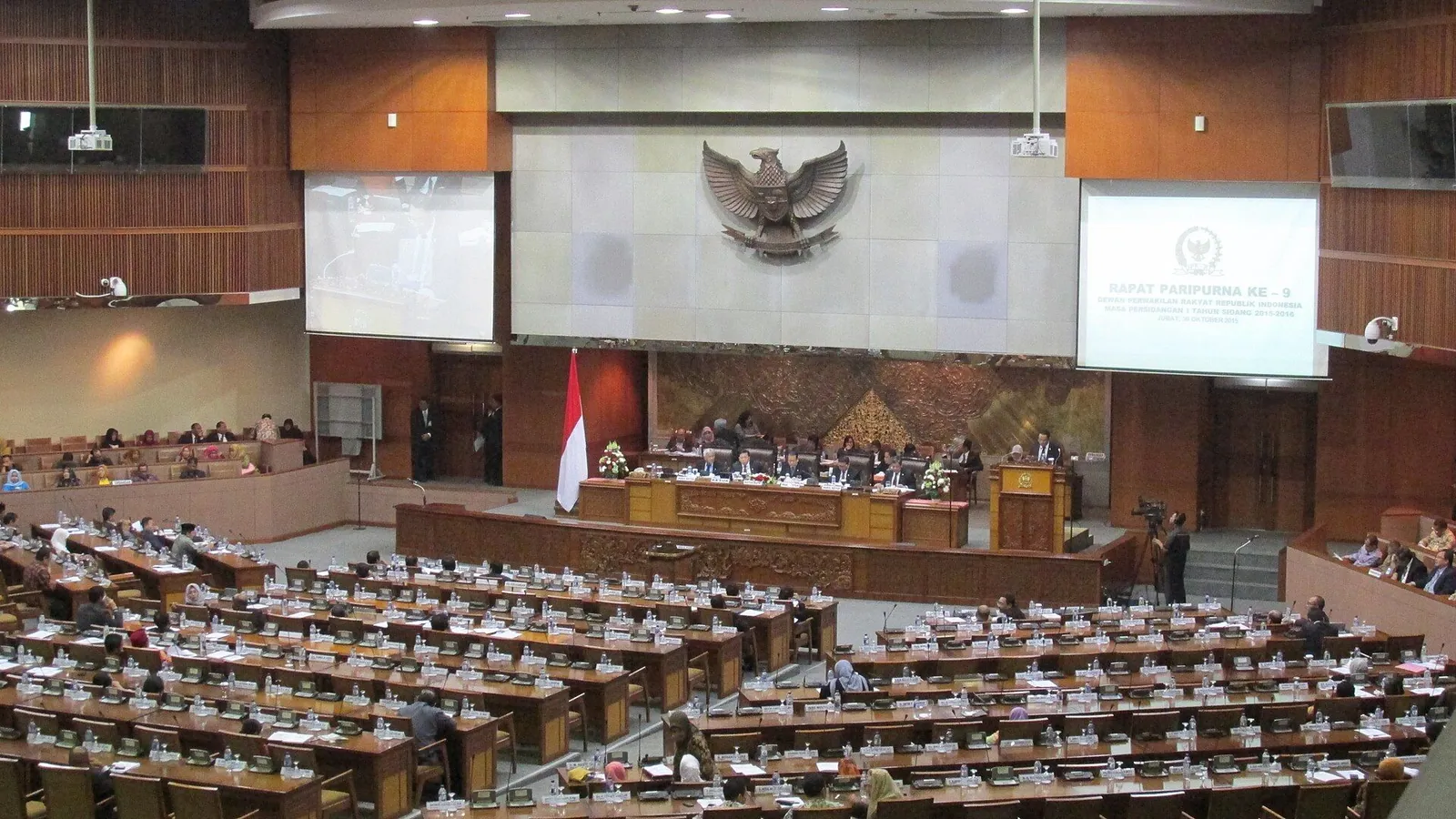
The House's Commission II has formed a working committee on a new elections bill. PKB lawmaker Muhammad Khozin said on 10 October 2026 that education requirements for presidential candidates will "certainly" be discussed and that the bill is targeted for March 2027, Sindonews reported. Commission II member Ahmad Irawan told CNN Indonesia on 21 October that every election petition at the MK, including rejected ones, is being studied.
Commission II deputy chair Agun Gunandjar Sudarsa said on 9 November that he has proposed in the bill that legislative candidates must hold a bachelor's degree, with no diploma equivalency, PasundanNews reported.
Former chief justice Jimly Asshiddiqie proposed on 7 October 2026 that the diploma requirement for presidential candidates be dropped entirely, with voters told the candidate's education, while the bar for legislative candidates is raised to a bachelor's degree, Warta Ekonomi reported. Perludem researcher Iqbal Kholidin said in September 2025 that a degree requirement could narrow political representation, and that parties should recruit on merit and candidates should be required to publish their education, Suara Surabaya reported.
None of these proposals is law. The requirements above remain in force.
Our verdict
Partly true. Each row on the officials' side of the post matches current law, with the article numbers above. The claim that the people "must have a degree" is not a rule: civil service requirements vary by job and some 2024 posts were open to high school graduates. As a description of what the state asks of job seekers, though, it points in the right direction: about nine in ten 2024 posts required more than high school, and senior career officials must hold a degree.
Sources
- 1.Antara: MK tolak permohonan syarat capres/caleg/cakada minimal sarjana (29 Sep 2025), antaranews.com
- 2.MK: Ikhtisar Putusan 87/PUU-XXIII/2025 tentang syarat pendidikan capres dan cawapres, s.mkri.id
- 3.MK: Ikhtisar Putusan 124/PUU-XXIV/2026 (12 May 2026), s.mkri.id
- 4.MK: Tanpa alat bukti, permohonan uji UU Pemilu tak diterima (Case 270/PUU-XXIV/2026, 12 Aug 2026), mkri.id
- 5.Pasal.id: Pasal 182 UU 7/2017 (DPD candidates), pasal.id
- 6.detikEdu: BPS, 63 anggota DPR lulusan SMA, 211 tak cantumkan pendidikan (Pasal 240 UU Pemilu), detik.com
- 7.Pasal.id: Pasal 7 UU 10/2016 (Pilkada), pasal.id
- 8.Kemendesa JDIH: UU 3/2024 tentang perubahan kedua UU Desa (Pasal 33, Pasal 50), jdih.kemendesa.go.id
- 9.Hukumonline: Syarat-syarat menjadi menteri di Indonesia (updated Sep 2026), hukumonline.com
- 10.detikSulsel: CPNS Kemenag 2024, formasi dan syarat, detik.com
- 11.Kanwil Kemenkum Maluku Utara: Penerimaan CASN Kemenkumham 2024, malut.kemenkum.go.id
- 12.AyoJakarta: Formasi penjaga tahanan lulusan SMA CPNS 2024, ayojakarta.com
- 13.Antara: Pemerintah berencana buka 150 ribu formasi CPNS (9 Nov 2026), antaranews.com
- 14.CNN Indonesia: Pemerintah buka peluang lulusan SMA/SMK ikut CPNS 2026, cnnindonesia.com
- 15.BKN: PP 11/2017 tentang Manajemen PNS, bkn.go.id
- 16.Sindonews: RUU Pemilu ditargetkan rampung Maret 2027, syarat pendidikan capres dibahas, nasional.sindonews.com
- 17.CNN Indonesia: Komisi II kaji gugatan syarat ijazah SMA capres-cawapres di RUU Pemilu, cnnindonesia.com
- 18.PasundanNews: Komisi II DPR wacanakan pengetatan syarat caleg (Agun Gunandjar), pasundannews.com
- 19.Warta Ekonomi: Jimly usulkan syarat ijazah capres dihapus, caleg wajib S1, wartaekonomi.co.id
- 20.Suara Surabaya: Polling dan pandangan Perludem soal syarat S1 anggota DPR, suarasurabaya.net
- 21.Analitica: Formasi CPNS 2024 per jenjang pendidikan (data SSCASN BKN), analitica.id
- 22.KemenPANRB: Pendaftaran CPNS dimulai 20 Agustus, tersedia 250.407 formasi (15 Aug 2024), menpan.go.id