Key points
- Verdict: partly true (changed from misleading on 16 November 2026).
- Income tax on officials' fixed salaries and allowances is borne by the state budget under PP 80/2010, so it does not reduce their take home pay.
- Indonesia has no wealth tax; CELIOS estimates a 1 to 2 percent tax on the richest could raise Rp142.2 trillion a year.
- Through September 2026, wage withholding (PPh 21) brought in Rp189.4 trillion against Rp19.2 trillion from individuals' annual income tax.
- The wealthy do pay income tax, so 'no tax at all' overstates.
Update, 16 November 2026: This fact check was revised. We changed the verdict from misleading to partly true and rewrote the headline. The earlier version accepted the tax office's point that officials' tax "is still paid to the treasury" as the main test. In practice the state budget, funded by taxpayers, pays that tax on officials' behalf, which is the substance of the complaint. The facts in the article are unchanged.
Claim: Social media posts reacting to Finance Minister Suahasil Nazara's 13 November 2026 appeal for public support to collect Rp514 trillion in taxes say ordinary people are being squeezed while the wealthy and public officials are free of tax.
Verdict: Partly true. On officials, the claim is close to the mark. The income tax on their fixed salaries and allowances is paid by the state budget on their behalf rather than deducted from their pay, so it does not reduce what they take home, unlike a private sector worker on the same salary. On the wealthy, the claim goes too far: rich individuals do pay income tax. But Indonesia has no wealth tax, dividends received by domestic taxpayers are exempt, and annual income tax from individuals brings in far less than tax withheld from employees' wages, according to ministry data. The part of the claim about ordinary people being squeezed reflects that split.
The context
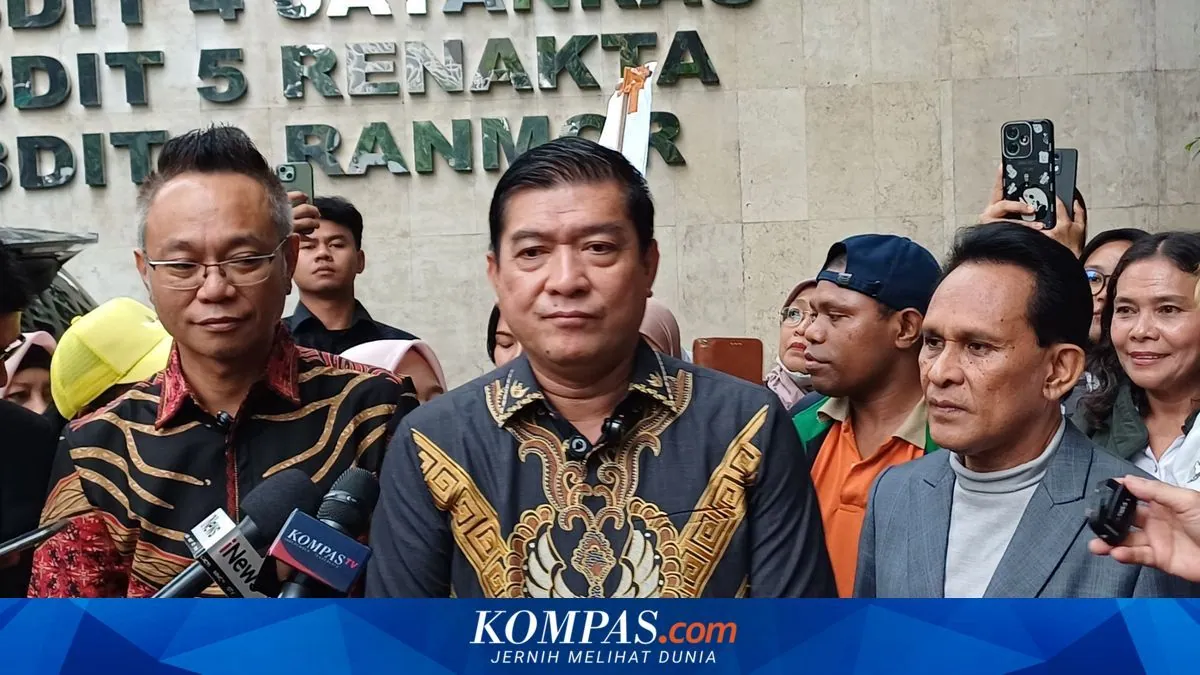
At the APBN KiTa briefing in Jakarta on 13 November, Suahasil, finance minister since 14 September 2026, said Rp514 trillion still had to be collected to reach the year-end tax outlook and asked "all the public and all the media" for support, Detik reported. Economists and public figures replied that the burden should fall first on high earners. Comedian Abdur Arsyad cited a CELIOS proposal for a wealth tax on the richest Indonesians and on officials' wealth, JawaPos reported. Comments under social media posts about the appeal include calls to cut officials' salaries.
Officials: taxed, but the state pays the bill
Under Government Regulation (PP) 80 of 2010, income tax under Article 21 owed on fixed monthly income paid from the national or regional budget is "borne by the government" from that budget. This covers state officials, including members of the House of Representatives (DPR), ministers and regional officials, as well as civil servants, soldiers and police, Kompas.com reported in August 2025 when the DPR's allowances caused public anger.
The Directorate General of Taxes (DJP) said at the time that "the income tax of DPR members and state officials is still paid to the state treasury; there is no tax exemption," according to Kompas.com. That statement is accurate as far as it goes: the tax is calculated and paid. It is a government statement, though, and it leaves out who pays. But because it is paid as an extra allowance from the budget, it does not reduce the officials' take-home pay. A private sector worker earning the same salary would have the tax withheld from their own wages. In substance, officials' salary tax is paid from public funds, which is why we rate this part of the claim as largely accurate.
On transparency, officials must also report their wealth to the Corruption Eradication Commission (KPK). For the 2025 reporting year, 96.24 percent of those required had filed by 31 March 2026, but the legislative sector lagged at 82.21 percent, or 16,729 of 20,348 people, the KPK said, according to Antara. Wealth reports are not tax returns, but the gap shows uneven compliance with disclosure rules among legislators.
The wealthy: income is taxed, wealth is not
Indonesia taxes income, not wealth. CELIOS has proposed a 1 percent tax on net wealth between Rp84 billion and Rp506 billion and 2 percent above that, which it estimates could raise Rp142.2 trillion a year, Antara reported. Director General of Taxes Bimo Wijayanto said on 15 October that "those are their calculations, their assumptions" and that the government has its own data, though the study could feed into policy.
The composition of receipts supports critics' concern that the system leans on wages and consumption. Through September 2026, income tax withheld from employees (PPh 21) reached Rp189.4 trillion, or 11.8 percent of net tax revenue, while annual income tax paid by individual taxpayers (PPh orang pribadi), which covers income outside payroll withholding, was only Rp19.2 trillion, or 1.2 percent, Bisnis reported from ministry data. VAT and luxury goods tax, paid by consumers, reached Rp793.55 trillion through October, up 39.1 percent, Republika reported.
Tax breaks also matter. The Finance Ministry's 2024 tax expenditure report put total tax expenditure at Rp400.1 trillion. Income tax breaks were Rp140.7 trillion, and the largest item, 23.7 percent of that, was the income tax exemption on dividends for domestic taxpayers, DDTCNews reported. That is about Rp33 trillion, by NewsWLD's calculation. Other large breaks benefit households and small firms, such as the VAT exemption on basic necessities (17.7 percent of Rp227.8 trillion in VAT breaks) and the exemption for small businesses below the VAT registration threshold (24.4 percent).
Is the public being squeezed?
The VAT rate rose to 12 percent on 1 January 2025, but President Prabowo Subianto limited the effective 12 percent rate to luxury goods subject to luxury sales tax; other goods and services stayed at an effective 11 percent, according to the Cabinet Secretariat. Then finance minister Purbaya Yudhi Sadewa said in 2026 that the VAT rate would be neither raised nor cut.
DJP's latest compliance push does reach many small taxpayers. Of the 475,698 individuals it emailed for deleting withholding slips from their 2025 returns, 312,546 had amounts between Rp100,000 and Rp1 million, while 71 had more than Rp1 billion each, Bimo said on 12 November, according to CNBC Indonesia.
Indonesia's tax ratio, including customs and excise, was 9.31 percent of GDP in 2025, down from 10.08 percent in 2024, Bisnis reported.
Bottom line
The rich do pay income tax under the law, so saying they pay "no tax" is wrong. Officials' salary tax is formally paid, but by the budget rather than from their own pay, so on that point the claim is largely right. There is no tax on wealth or on domestic dividends, and individual annual income tax yields little compared with wage withholding and VAT. Taken together the claim is partly true, and those facts explain why many people feel the burden is uneven.
Sources
- 1.Detik: Setoran Pajak Kurang Rp 514 T, Menkeu: Saya Mohon Dukungan Masyarakat, finance.detik.com
- 2.Kompas.com: Tak Hanya DPR, Semua Pejabat Negara Juga Menikmati Tunjangan PPh 21 (26 Aug 2025), money.kompas.com
- 3.PP 80 Tahun 2010 (text), kemhan.go.id
- 4.Antara: KPK umumkan 96,24 persen penyelenggara negara lapor kekayaan 2025, antaranews.com
- 5.Antara: DJP respons usulan potensi penerimaan pajak kekayaan Rp142,2 triliun, antaranews.com
- 6.Bisnis: PPN Jadi Penyumbang Terbesar Penerimaan Pajak per September 2026, ekonomi.bisnis.com
- 7.Republika: Penerimaan Pajak Capai Rp1.796,8 Triliun, ekonomi.republika.co.id
- 8.DDTCNews: Kemenkeu Rilis Laporan Belanja Perpajakan 2024, Nilainya Rp400,1 T, news.ddtc.co.id
- 9.Setkab: Presiden Prabowo: PPN 12% Hanya Barang dan Jasa Mewah, setkab.go.id
- 10.DDTCNews: Jepang Akan Pangkas Tarif PPN, Purbaya: Kita Steady, news.ddtc.co.id
- 11.CNBC Indonesia: Bos DJP Kirim Surat Peringatan ke 475.698 Wajib Pajak, cnbcindonesia.com
- 12.Bisnis: Tax Ratio 2025 Turun Jadi 9,31%, ekonomi.bisnis.com
- 13.JawaPos: Kejar Pajak Rp 514 Triliun, Abdur Arsyad Usul Pemerintah Sasar 50 Orang Terkaya, jawapos.com