Key points
- The Trump administration encouraged Venezuela and Iraq, two OPEC founders, to consider leaving the group earlier this year, Reuters reported, citing ten people familiar with the matter.
- Washington used its control of Venezuelan state funds to stop Caracas paying its annual OPEC dues of about 2.8 million euros, the sources said; the State Department did not answer that question.
- Saudi Crown Prince Mohammed bin Salman persuaded Washington to back off on Venezuela, and Iraq's oil ministry talked Prime Minister Ali al-Zaidi out of an exit, according to the report.
- OPEC+ meets on Sunday and has agreed in principle to keep first quarter 2027 targets unchanged, Reuters reported, citing three sources.
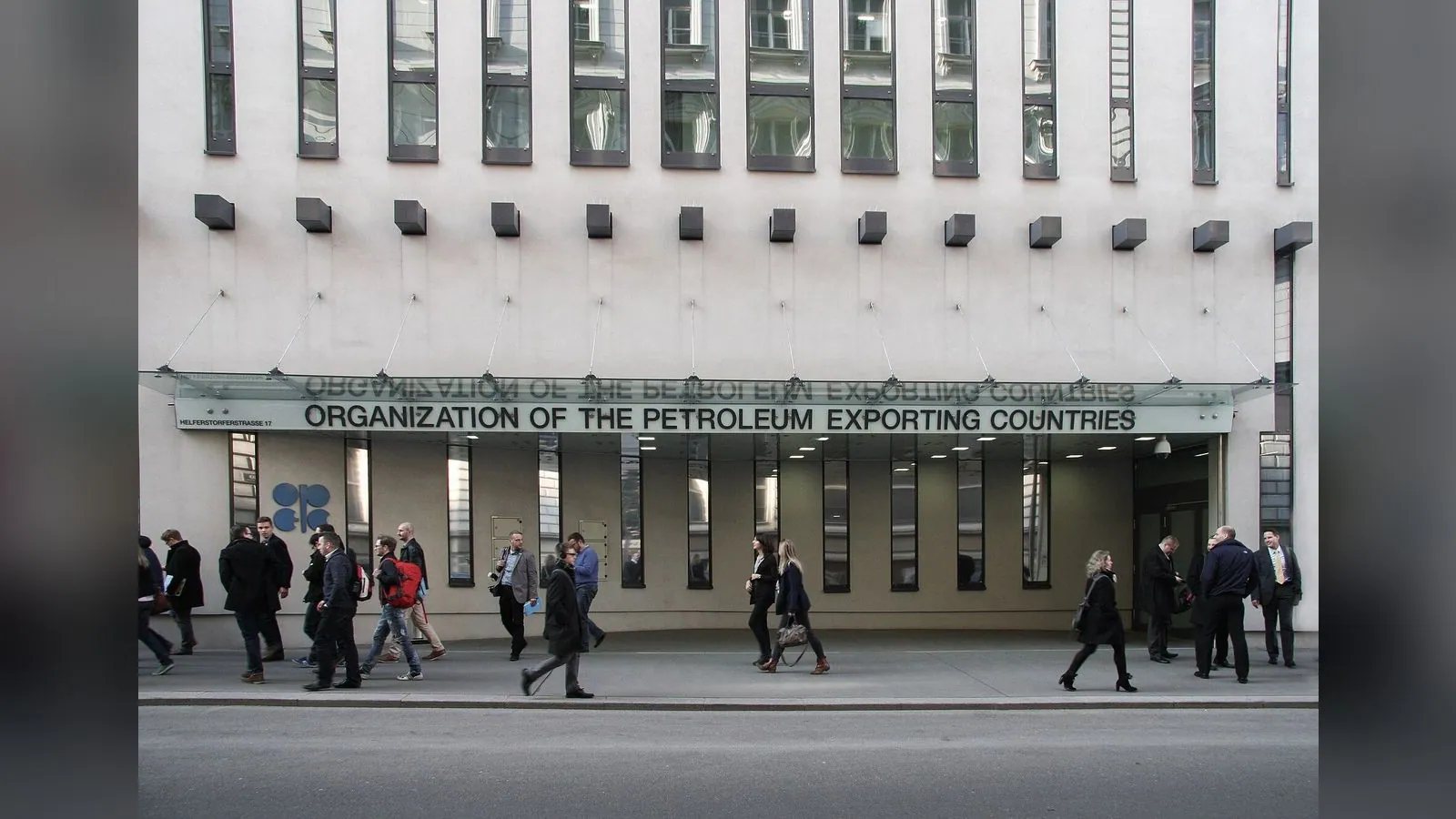
The Trump administration encouraged Venezuela and Iraq to consider leaving OPEC earlier this year and prevented Venezuela from paying its annual membership dues to the group, Reuters reported on 27 November, citing ten people familiar with the matter.
The report raises a question that goes beyond oil policy: how Washington is using the financial control it holds over two sovereign producers. The United States controls Venezuela's access to its state funds after the ouster of Nicolas Maduro in January, and Iraq's oil revenues still pass through an account at the Federal Reserve Bank of New York, a structure set up after the 2003 invasion, according to Reuters.
Venezuela and Iraq are two of OPEC's five founding members. Reuters described the moves, which had not been reported before, as an unusually direct challenge to an organisation President Donald Trump has long accused of keeping oil prices artificially high.
What the sources told Reuters
After the US seized Maduro in January, the State Department opened discussions with Venezuelan officials in Washington on whether the country should leave OPEC, five people familiar with the matter told Reuters. They did not identify who took part.
Trump wanted US oil majors to revive Venezuela's output and worried that OPEC decisions could hinder that plan, the sources said. In August, Trump said publicly that it was up to Venezuela whether to leave OPEC.
The pressure went far enough that Saudi Crown Prince Mohammed bin Salman intervened this summer and persuaded the administration not to press the issue further, two people familiar with the matter told Reuters. Saudi Arabia is OPEC's largest producer and its de facto leader.
In Iraq, US officials held talks this summer with Prime Minister Ali Faleh al-Zaidi and encouraged an exit as Exxon Mobil and Chevron planned major new investments in the country, two people said. Al-Zaidi then raised the idea at a government meeting, but the oil ministry persuaded him to stay and consider seeking a higher production quota instead, according to the report.
A blocked payment and an unanswered question
OPEC splits its fees equally among members at around 2.8 million euros ($3.08 million) each, Reuters reported. The sum is small next to oil revenues, but paying it is a symbolic marker of membership in a group Caracas helped found. Washington argued the money could be spent on "more important matters", one person familiar with Venezuela's relationship with OPEC told Reuters.
The State Department did not answer Reuters' questions about whether it had prevented the payment. It did confirm that it decides how Venezuela can use state funds held in a US-controlled account. "The Department receives disbursement requests from the interim Venezuelan government and reviews the requests, including against a list of approved and prohibited uses of the foreign Government Deposit Funds," a State Department official told the agency.
The same official said it was possible that lower-level US officials had raised leaving OPEC with Venezuela's government, but that "it has not been among the issues raised by high-level officials." On Iraq, the official said talks "have focused on improving energy infrastructure to increase production and transportation of energy, not OPEC." That account does not match what the sources described, and Reuters said it could not establish exactly when the dues request was rejected.
The handling of Venezuela's money is already under official scrutiny. The US Government Accountability Office opened a formal investigation in July into the administration's management and disbursement of Venezuelan oil revenues after lawmakers requested more transparency, Reuters reported. Washington's control of the country's finances has led some Venezuelans to describe their country as a US protectorate rather than a sovereign state, according to the agency. The administration says the revenues are used to meet the needs of Venezuelans, including government salaries and essential services.
OPEC has discretion to disregard unpaid fees and is not planning to expel Venezuela, two OPEC sources told Reuters. Representatives for OPEC and for the governments of Venezuela, Iraq and Saudi Arabia did not respond to Reuters' requests for comment.
Iraq has denied exit talk before
Iraq's oil ministry has publicly rejected the idea of leaving the group in the past. On 25 June, after Bloomberg reported that Baghdad could eventually reconsider its membership if its quota was not raised, the ministry said such reports "do not reflect the official position" of the government and that neither the prime minister nor the government had proposed withdrawing, Anadolu Agency reported. The ministry instead called for production ceilings that reflect members' sustainable capacity.
The new report suggests the question was discussed at the top of government. Some members of Iraq's ruling coalition favour leaving OPEC and OPEC+, which they see as dominated by Saudi Arabia and Russia, so the issue could return, the people told Reuters. There is no indication that Washington has tried to block Iraq's dues, the agency added.
Why it matters before Sunday's OPEC+ meeting
The report lands days before OPEC and its allies meet on Sunday to discuss output policy for 2027, with existing production agreements expiring at the end of this year. OPEC+ has reached an agreement in principle to keep production targets unchanged in the first quarter of 2027, Reuters reported on Friday, citing three sources.
The group is already under strain. OPEC now has 11 members and has lost four since 2019: the United Arab Emirates announced its exit earlier this year, and Angola, Ecuador and Qatar left in 2024, 2020 and 2019, Reuters reported. There is no indication the US was involved in those decisions, the agency said. OPEC's share of the global oil market recently hit a low because of disruption from the US and Israeli war on Iran, another founding member.
"The risk of OPEC fracture is rising," Dan Alamariu, chief geopolitical strategist at Alpine Macro, told Reuters.
Other analysts see the same fault lines in the quota talks. With the exception of Iraq, most OPEC+ members are producing well below their existing quotas, and some, including Russia, are unable to raise output further, Commerzbank analyst Barbara Lambrecht said, according to MarketWatch. "A more fractious and less cohesive OPEC+ will lead to greater oil price volatility and skew the balance of risks towards lower oil prices over time," Capital Economics economist Hamad Hussain wrote in a note cited by MarketWatch.
Brent crude for January delivery fell 1.2% to $95.44 a barrel on Friday but ended the week up 3.1%, MarketWatch reported, as attacks on Saudi infrastructure and incidents around the Strait of Hormuz added a risk premium. Oil flows through the strait remain at 31% of prewar levels, according to preliminary Kpler data cited by MarketWatch. Rystad Energy still forecasts a global surplus of around 5 million barrels per day next year, Iran International reported.
Venezuela's output and what remains unclear
Venezuela is exempt from OPEC+ output quotas because its production has collapsed after years of sanctions and mismanagement. It pumped about 1.2 million barrels per day in September, according to OPEC figures cited by Reuters, and state oil company PDVSA plans to reach 1.5 million bpd by the end of next year. A return to quotas is unlikely until output reaches around 2 million bpd again, a source familiar with Venezuela's OPEC position told Reuters.
Several points remain unconfirmed. The Reuters account rests on unnamed sources, the State Department has not answered the central question about the blocked payment, and none of the governments involved has commented on the record. NewsWLD has not independently verified the sources' account.
Sources
- 1.Reuters (via Investing.com): Exclusive: US pushed Venezuela, Iraq to consider leaving OPEC, sources say (27 Nov 2026), investing.com
- 2.The Independent: Saudi crown prince stepped in to halt quiet American campaign to break up OPEC oil cartel, sources say (27 Nov 2026), independent.co.uk
- 3.MarketWatch: Oil futures settle lower ahead of OPEC+ policy meeting (27 Nov 2026), marketwatch.com
- 4.Iran International: OPEC+ expected to keep oil output targets unchanged amid Iran war uncertainty, Reuters (28 Nov 2026), iranintl.com
- 5.Anadolu Agency: Iraqi Oil Ministry denies reports of potential OPEC exit, urges output quota reassessment (25 Jun 2026), aa.com.tr