Key points
- Africa CDC chief Jean Kaseya told Reuters on 15 November the outbreak is "still not under control" six months after it was declared on 15 May.
- Congolese government data count more than 11,200 infections and 5,500 deaths; a joint Africa CDC, WHO and UN statement gives more than 11,000 cases and 5,400 deaths.
- Kaseya says only $1.3 billion of $2.9 billion pledged has been released, and some health workers have not been paid for months.
- In October Africa CDC said more than $700 million of about $962 million disbursed to aid organisations had not been accounted for.
- MSF says surveillance teams "exist on paper" and only 9% of its Ebola patients in Ituri had been identified as contacts beforehand.
The Ebola outbreak in the Democratic Republic of the Congo is "still not under control" six months after it was declared, the head of Africa's top public health agency said on Sunday, pointing to unpaid health workers, attacks on responders and donor money that has not reached the places where people are dying.
"We are all in agreement today to say that this outbreak is still serious, and is still not under control," Jean Kaseya, director general of the Africa Centres for Disease Control and Prevention (Africa CDC), told Reuters in an interview on 15 November. "If we don't stop this outbreak now, it would be the worst Ebola outbreak that the world will have."
Since the outbreak was announced on 15 May, more than 11,200 infections and 5,500 deaths have been reported, according to Congolese government data cited by Reuters. A joint statement issued the same day by Africa CDC, the World Health Organization (WHO) and UN agencies put the toll at more than 11,000 cases and 5,400 deaths.
The outbreak is caused by the rare Bundibugyo species of the virus, for which there is no approved vaccine or treatment. It is the second largest Ebola outbreak on record, after the 2014 to 2016 epidemic in West Africa that infected more than 28,600 people and killed more than 11,000, Reuters and Al Jazeera reported.
Cases surfacing too late
Kaseya said more than 80% of new cases are emerging among people who were not on contact lists, and more than 65% of deaths are happening in the community rather than in health centres. Ebola is most contagious in its late stages, so deaths at home raise the risk for relatives and mourners.
The joint statement said contact follow up "remains below target" and that community deaths, about two thirds of confirmed deaths, "show that infections are still being identified too late." Between 400 and 500 new cases are still reported each week, and the outbreak has spread to 67 health zones in eight provinces.
Children are among the hardest hit. According to the statement, they account for more than a quarter of confirmed cases and a third of deaths, and seven in 10 children under five with confirmed Ebola have died.
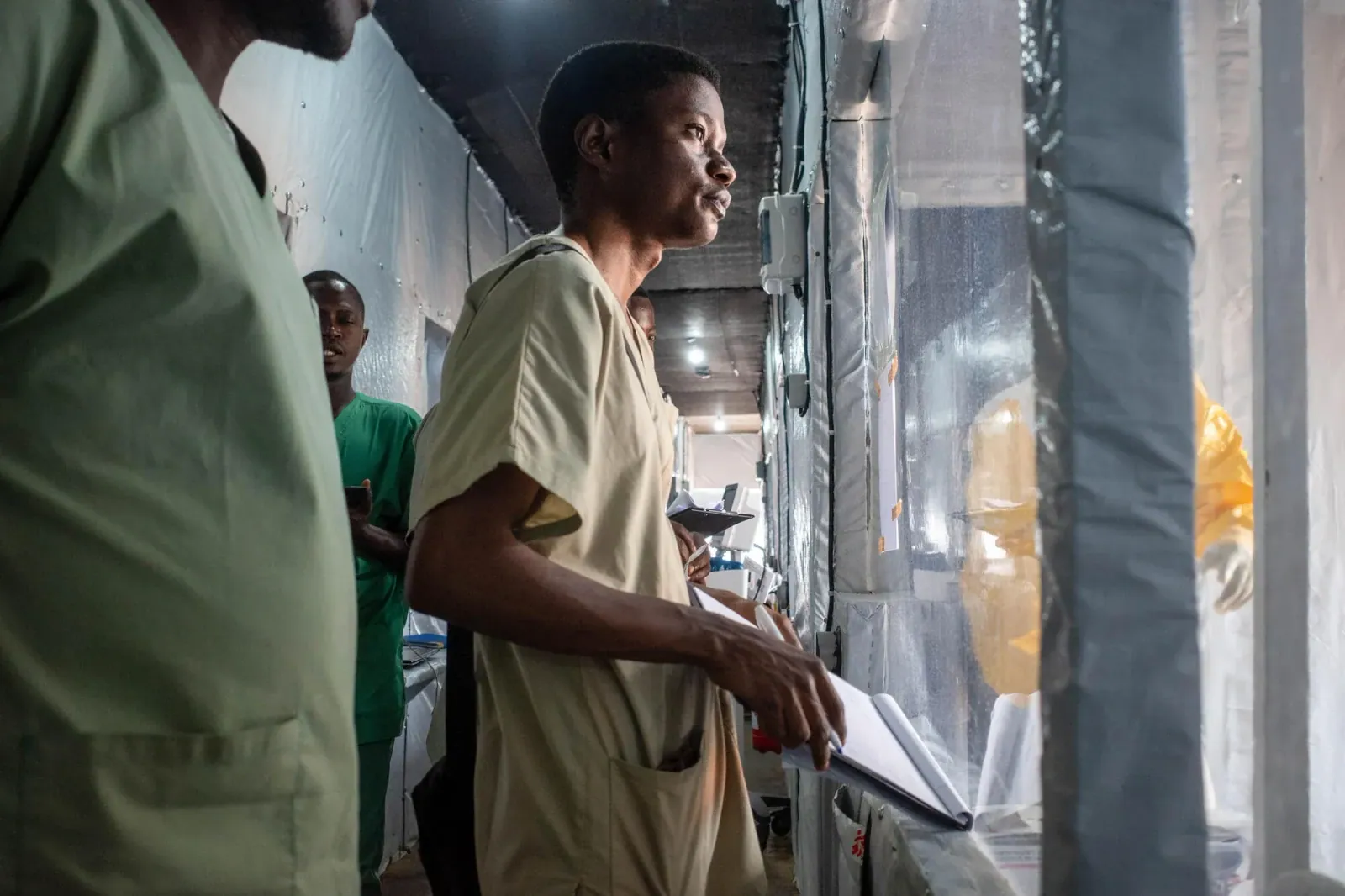
Médecins Sans Frontières (MSF), which runs eight Ebola treatment centres in Congo, said in a 12 November report that the surveillance system was failing. Only 9% of the Ebola patients its teams treated in Ituri province had previously been identified as contacts, the charity said. In the Beni health zone of North Kivu, close to three quarters of Ebola patients caught the disease in a health facility, MSF said, describing facilities without adequate sterilisation, water, chlorine or triage.
British epidemiologist Neil Ferguson has estimated that more than half of cases are going undetected and that the outbreak is likely to last another year, the BBC reported, citing Reuters.
Pledged money that has not arrived
Donors have pledged about $2.9 billion for the response, but only $1.3 billion has been released, Kaseya said, according to Al Jazeera. He called on donors to release the remaining roughly $1.6 billion and to work with the government in Kinshasa so that money is not wasted through duplicated programmes.
Kaseya described the coordination problems between Congo's government and donors as "a collective failure" and said: "We are not pointing fingers." He acknowledged that some health workers had not been paid for months and said the government was working to digitise its payroll. The joint statement also said delays in paying frontline workers "create tension and slow the response."
The question of where money has already gone is unresolved. In October, Africa CDC and Congo's health ministry said financial information from aid organisations left more than $700 million of donor money unaccounted for, Reuters reported. Kaseya said then that donors had disbursed about $962 million to organisations implementing the response, rather than to the government, and that only about a third of those partners had shared financial information. Those that did reported receiving $228 million, of which $127 million had been spent.
Kaseya said at the time it was too early to speak of embezzlement and called the gap a major transparency and financial reporting problem. He warned that non compliant organisations could be barred from working in Congo. Health Minister Samuel Roger Kamba said only 22% of aid agencies had provided the required details of their work, according to the BBC. "Our requirement is clear: transparency must be total," Kamba wrote on X.
None of the sources reviewed by NewsWLD show how much of that $700 million gap has since been explained. The figures released on Sunday do not say how much of the $1.3 billion released has reached frontline teams.
'Empty hands and empty pockets'
MSF said the gap between money mobilised and help on the ground was "simply unacceptable" six months in. "Despite the vast amounts of money provided for the response, many frontline responders are left trying to contain the outbreak with empty hands and empty pockets," said Dr Javid Abdelmoneim, MSF's international president.
The charity listed response staff who are untrained, unpaid and sometimes on strike; ambulances without fuel; "surveillance teams that exist on paper but are nowhere to be seen on the ground"; and community workers without phones or mobile data to send alerts. It said the response was too slow in North Kivu and that Haut Uele province "remains dramatically overlooked." MSF said it has allocated 64.6 million euros to its response, funded almost entirely by private donations.
MSF urged the Congolese government and UN agencies to strengthen oversight and accountability and to make sure response personnel are trained, paid and equipped. The BBC said it had asked the Congolese government for comment on the MSF report.
Violence against responders
Insecurity in eastern Congo remains one of the biggest obstacles, according to the joint statement. It recorded more than 80 attacks on health care since the outbreak was declared. A recent armed attack in Cantine Aloya killed 66 civilians, including three health workers, and three health facilities were looted. More than 1,000 contacts were lost to follow up and three confirmed cases remain unaccounted for, the statement said. A second attack on the town was reported on 11 November. The agencies called for a halt in hostilities.
The UN and Congo's government warned last week that nearly 10 million people in the region are in dire need amid a severe food crisis, the BBC reported.
What has worked
The agencies said most early epicentres, including Mongbwalu, Nyankunde, Nizi, Rwampara and Butembo, have been brought under control, and new cases in Bunia have halved. Laboratory capacity has grown from two laboratories to more than two dozen, close to 2,000 treatment beds are available in 104 centres, and almost 90% of registered deaths now receive a safe and dignified burial, the statement said. About 3,000 people have recovered.
WHO approved clinical trials of two new Ebola vaccine candidates earlier this month and expects results in early 2027, Al Jazeera reported. "Transmission is slowing in several early epicentres," WHO Director General Tedros Adhanom Ghebreyesus wrote on X.
Cases have also been reported in Kenya, Uganda and Nigeria, according to the BBC, which said Kenya's last Ebola patient was discharged last week. The agencies said funding must be sustained through 2027 to avoid losing the gains made so far.
Sources
- 1.Africa CDC says Ebola outbreak still out of control six months since it was declared (Reuters via Daily Maverick, 15 Nov 2026), dailymaverick.co.za
- 2.Africa CDC says Ebola outbreak in DR Congo 'still not under control' (Al Jazeera, 15 Nov 2026), aljazeera.com
- 3.Six months on, accessing hard-to-reach communities key to halting Ebola outbreak (Africa CDC, WHO and UN joint statement, 15 Nov 2026), africacdc.org
- 4.Ebola in DRC: Persistent gaps between resources and action remain six months on (MSF, 12 Nov 2026), msf.org
- 5.Millions of Ebola dollars missing with staff unpaid while virus spreads, charity says (BBC), bbc.com
- 6.Africa CDC says over $700 million in Ebola response funds unaccounted for in Congo (Reuters via CNBC Africa, 16 Oct 2026), cnbcafrica.com