Key points
- COP31 negotiations chair Chris Bowen says a first draft of the main text should emerge early this week; the summit ends on 20 November.
- Big fossil fuel producers and consumers are resisting firm targets, observers told Reuters; the US skipped the talks for a second year.
- Carbon Brief reported that hopes of putting a 35% electrification goal for 2035 in the main text appear to be fading.
- African countries want adaptation finance tripled to at least $120 billion a year by 2035.
The UN climate summit in Antalya entered its second and final week on Sunday with most negotiating tracks unresolved, no draft of the main political decision yet on the table and deep divisions over how far countries should commit to moving away from oil, gas and coal.
Technical talks were due to wrap up at a midway plenary on Saturday night. The session, set for 5 p.m., was pushed back to 8 p.m., and many tracks remained "mired in brackets", the term for disputed text, Carbon Brief reported. "Gridlock is par for the course midway through the COP. But, in the corridors, several observers told Carbon Brief that this year is worse than usual," the outlet wrote.
Hosts sound upbeat
The two presidencies struck a more positive tone. COP31 President Murat Kurum, Türkiye's environment minister, said on Sunday: "We have completed the first week at COP31 with strong progress. A strong shared will is emerging, extending from electrification to climate finance, adaptation and a just transition." He added that "there are differences awaiting resolution and important issues carried over to the second week", according to The Turkiye Times.
Australia's climate and energy minister Chris Bowen, who chairs the negotiations, said parties had discussed 160 items and 60 key mandates, and that a first draft of the main text was expected early this week, Reuters reported. UN climate chief Simon Stiell called progress "constructive" but urged governments to "move swiftly to the hardest issues and to avoid tactical delays".
The fossil fuel fight
Big fossil fuel producers and consumers are resisting any deal that would set firm new targets or a shift away from oil, gas and coal, observers told Reuters at the end of the first week. Saudi Arabia and Russia have traditionally resisted language limiting fossil fuels, while India and other large developing economies have opposed measures they say could restrict their development, Reuters reported. Representatives of India, Saudi Arabia and Russia did not immediately comment to Reuters.
"We've also heard quite clearly from countries like India, the G77, that they don't want any firm targets. They don't want any kind of technology or fuel-specific language," said Katrine Petersen, an observer from the think tank E3G.
The United States, the world's biggest oil consumer, has skipped the talks for the second year in a row under President Donald Trump, who has called global warming a hoax, Reuters reported. A UN report last month found the world is on course to exceed the 1.5 degrees Celsius limit set in the 2015 Paris Agreement.
A first compilation of ideas for the main decision, published by the presidencies, includes welcoming the roadmap on transitioning away from fossil fuels launched by Brazil at COP30, according to the campaign group 350.org. "Settling for the lowest common denominator would be a failure of leadership," said Fanny Petitbon of 350.org.
Electrification pledge loses ground
Türkiye has made a voluntary pledge to raise electricity's share of global final energy use to 35% by 2035, from 23% now, the centrepiece of its presidency. Kurum said more than 30 states and nearly 100 private organisations back it. But Carbon Brief reported that Australian and Turkish hopes of including the goal in the main text "appear to be fading", and Bowen told reporters it was not part of the formal negotiations.
The pledge does not say how the extra electricity should be generated. The EU's top climate negotiator Wopke Hoekstra signalled the bloc could drop its demand for "clean" electrification to win more support, saying "it would be a tactical mistake to seek absolutes in this", Climate Home News reported. Andreas Sieber of 350.org called that a "spineless tradeoff".
Money is the hardest issue
Kurum said climate finance would be the hardest issue of the week. "At this point, we have not even reached $1.3 trillion. We are not expecting a new commitment, but we want existing commitments to be fulfilled," he said, referring to the annual climate finance goal of $1.3 trillion.
African countries want a commitment to triple adaptation finance to "at least $120 billion per year by 2035", Climate Home News reported, while one option in a draft text would open a review of an existing finance goal, an idea African countries are likely to resist. Civil society groups condemned the limited scope of a draft for a new Just Transition Mechanism, the outlet reported.
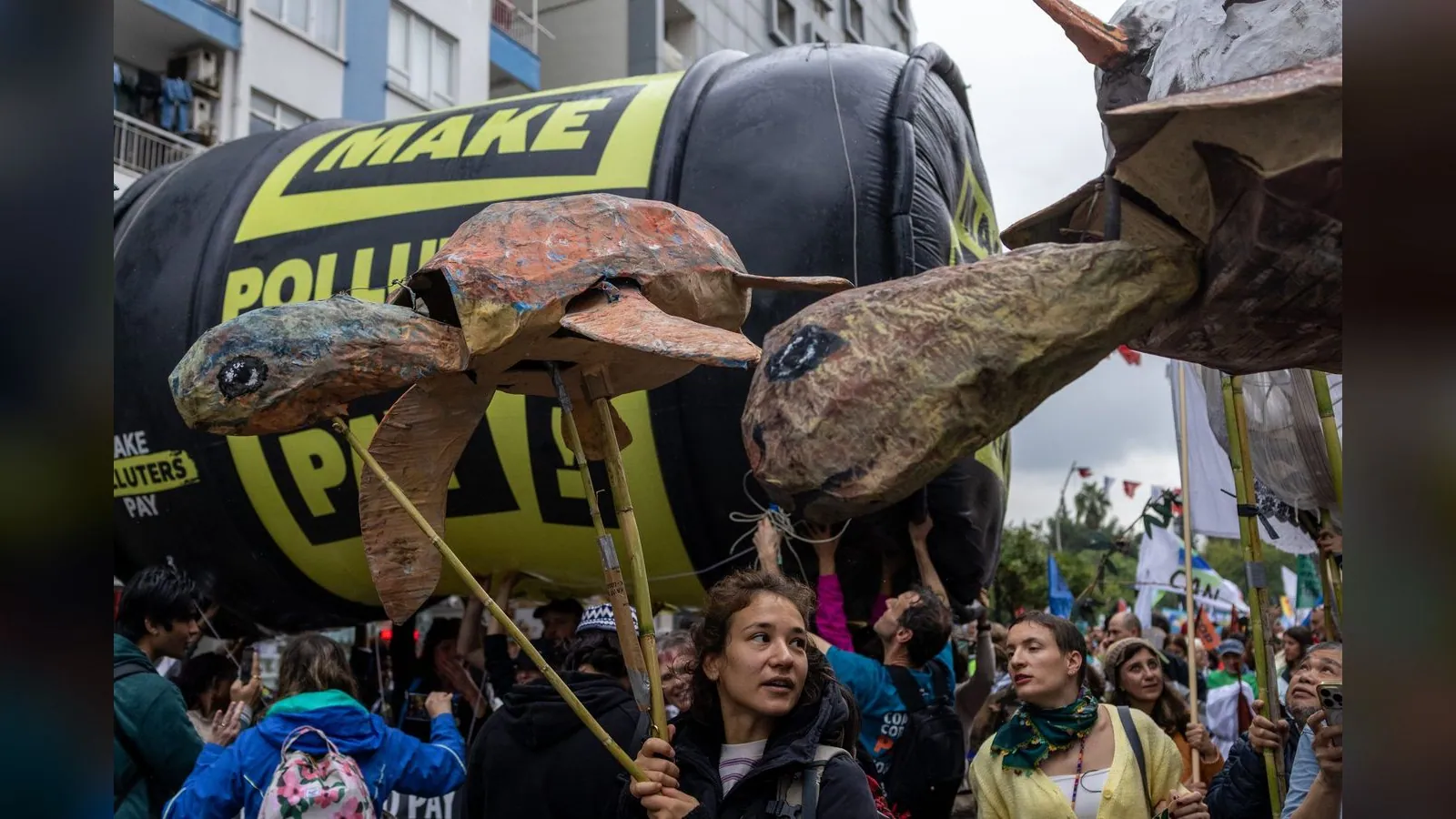
"Climate finance is the most important barrier to climate action in the Global South," Tasneem Essop, executive director of Climate Action Network, told Climate Home News during a march in Antalya on Saturday, accusing rich countries of "taking one step forward, three steps backward". Harjeet Singh of the Satat Sampada Climate Foundation warned the summit risked becoming "a COP of distraction".
The summit is scheduled to close on 20 November, though Carbon Brief noted that the Australian presidency is avoiding predictions on when it will end.
Sources
- 1.Carbon Brief Connect: COP31 midway negotiations update, connect.carbonbrief.org
- 2.The Turkiye Times: COP31 enters crucial second week as Kurum seeks strong political outcome from Antalya, theturkiyetimes.com
- 3.The Turkiye Times: COP31 negotiations chair Bowen says first week made good progress, theturkiyetimes.com
- 4.CNA (Reuters): COP31 talks face early friction over future of fossil fuels, channelnewsasia.com
- 5.Climate Home News: COP31 Bulletin Day 6, climatechangenews.com
- 6.350.org: COP31 cover decision proposals open battle over fossil fuel transition and finance, 350.org