Key points
- Verdict: partly true.
- BGN activated 480, 980 and 953 kitchens in October and November 2026, which it says are in 3T or high stunting areas.
- Those 2,413 kitchens are under 9 percent of the 27,485 counted at the end of October.
- In April 2026 more than half of kitchens were in three Java provinces; several of Papua's poorest regencies had none.
Update, 16 November 2026: We rewrote the headline, which previously repeated BGN's claim, and clarified that BGN's lists of new kitchen locations are the agency's own and have not been independently verified. The verdict, partly true, is unchanged.
Claim: The National Nutrition Agency (BGN) says new free meals kitchens are being directed to underdeveloped, frontier and outermost (3T) regions and areas with high stunting. Its 4 November 2026 press release quoted the agency as saying: "These kitchens are directed to areas with high and very high stunting prevalence and to underdeveloped, frontier and outermost regions."
Verdict: Partly true. The kitchens BGN activated in October and November 2026 were placed in 3T or high stunting areas, by the agency's own account. But they are a small share of a network that, by every published dataset, was built mostly in Java and still leaves some of the poorest regencies with no kitchen at all.
What BGN says
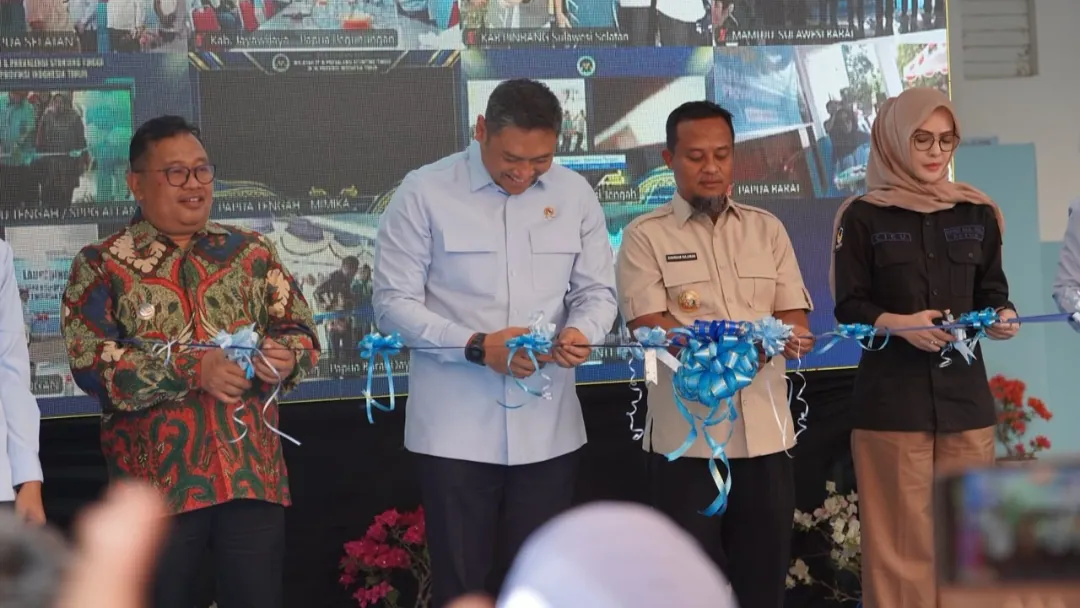
BGN activated 480 kitchens in 16 provinces of eastern Indonesia, including six Papua provinces, East Nusa Tenggara and Maluku, on 2 October 2026, according to BGN. It activated 980 more in Sumatra, Kalimantan and Bali on 14 October and said all of them were in 3T or high stunting areas, its release said. On 4 November it activated 953 in 34 provinces, aimed at about 1.5 million beneficiaries, and said these too were directed to high stunting and 3T areas, according to BGN. Finance Minister Suahasil Nazara said on 13 November that 1,500 kitchens were active in 3T and high stunting areas, ANTARA reported.
What the data shows
The three batches add up to 2,413 kitchens. The Finance Ministry counted 27,485 kitchens at the end of October 2026, so the batches are under 9 percent of the network, and BGN says new kitchens start small, at around 500 portions.
Before the push, the network leaned heavily to Java. As of 24 April 2026, West Java (23.1 percent), Central Java (15.8 percent) and East Java (14.7 percent) held more than half of 26,111 operating kitchens, according to an analysis of BGN data in The Conversation. A BRIN study of 27,427 kitchens as of 30 April 2026 found none in Pegunungan Bintang, Puncak, Tolikara, Dogiyai and Intan Jaya in Papua, and 149 high stunting regencies and cities with little coverage, Katadata reported.
The government has acknowledged this. In March 2026 BGN's target was about 28,000 kitchens in agglomeration areas and 8,617 in remote areas, BBC News Indonesia reported. In June the then BGN head, Nanik S Deyang, said kitchens were still concentrated in Java and ordered a moratorium on new sites, while Coordinating Minister for Food Zulkifli Hasan said agglomeration kitchens had reached 27,877 against a plan of 21,000, according to the National Police news portal.
Why the network leaned to Java
The way kitchens were funded helps explain the pattern. MBG relies on private partners, usually foundations, to build and run kitchens, and BRIN researcher Yanu Endar Prasetyo said that design favours regions with capital and investors, Katadata reported. Until October 2026 every kitchen also received a fixed incentive of Rp6 million a day regardless of how many portions it served. Zulkifli Hasan said in June that agglomeration kitchens exceeded the plan by 6,877 and put the cost of that excess at more than Rp1 trillion a month, according to the National Police news portal. On 19 October he said the fixed fee had been replaced with Rp2,000 for each portion served, ANTARA reported.
The gap in remote regions is large. The Conversation's analysis of BGN data found 15 provinces where each kitchen would have to exceed the 3,000 portion daily cap to reach every pupil, led by Highland Papua with an implied load of 19,278 portions per kitchen.
Inside the 3T batches
The batches are not uniform. Of the 480 kitchens activated on 2 October, when 27,022 kitchens were operating nationwide, 211 were independent partner kitchens and 269 were remote kitchens, CNN Indonesia reported. Of the 980 activated on 14 October, 691 were in Sumatra, according to BGN. BGN has not said how many of the 953 kitchens activated on 4 November sit in officially designated 3T regencies rather than in high stunting areas elsewhere.
Why partly true
BGN's statement about where its newest kitchens go matches its own published lists. Those lists are the agency's account, and NewsWLD has not been able to check them against independent data. What it does not show is that the programme as a whole prioritises 3T regions. The 3T batches came 21 months after launch, account for under a tenth of kitchens, and BGN has not published a breakdown of how many of its 27,485 kitchens sit in officially designated 3T regencies. Until it does, the claim that MBG prioritises 3T areas holds only for the latest activations.
Sources
- 1.BGN Kembali Aktivasi 953 SPPG Baru di 34 Provinsi (BGN, 4 Nov 2026), bgn.go.id
- 2.BGN Kembali Buka Hampir 1000 Dapur MBG di Wilayah 3T (BGN, 14 Oct 2026), bgn.go.id
- 3.Kepala BGN: Peresmian 480 SPPG di Wilayah 3T adalah Langkah Awal (BGN, 2 Oct 2026), bgn.go.id
- 4.Menkeu: Realisasi anggaran MBG capai Rp173,2 triliun (ANTARA, 13 Nov 2026), antaranews.com
- 5.BGN percepat aktivasi SPPG baru di wilayah 3T (ANTARA, 19 Oct 2026), antaranews.com
- 6.BGN Tambah 480 SPPG di 3T dan Rawan Stunting (CNN Indonesia, 5 Oct 2026), cnnindonesia.com
- 7.Layanan dapur MBG terkonsentrasi di Jawa (The Conversation), theconversation.com
- 8.Paradoks MBG (Katadata, 26 Jun 2026), katadata.co.id
- 9.MBG: 2.721 SPPG sempat ditutup sementara (BBC News Indonesia, 14 Mar 2026), bbc.com
- 10.Menko Pangan: Dapur SPPG di Wilayah 3T Bertambah Menjadi 8.617 Titik (Tribratanews, 12 Jun 2026), tribratanews.polri.go.id