Key points
- BNPB recorded 1,201 deaths, 142 missing and 170,050 damaged buildings as of 25 January 2026.
- President Prabowo revoked the permits of 28 companies on 20 January 2026, based on a Satgas PKH report; Agincourt Resources later regained its Martabe permit.
- The Ministry of Environment sued six companies for about Rp4.84 trillion; Agincourt and North Sumatera Hydro Energy settled, four cases including a Rp3.9 trillion claim against Toba Pulp Lestari are pending.
- The ministry verified 175 companies and announced audit orders against 67.
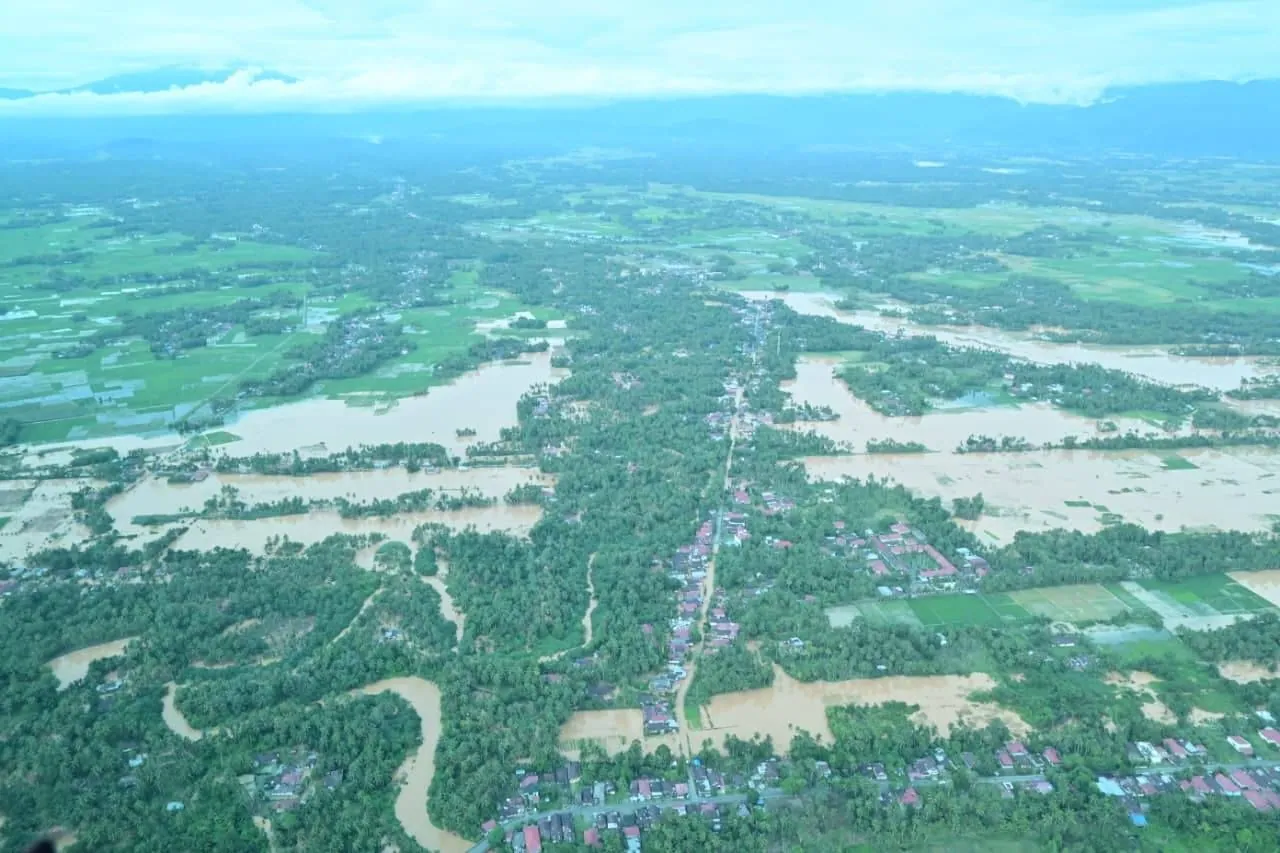
Sixty days after floods and landslides struck Aceh, North Sumatra and West Sumatra in late November 2025, the National Disaster Management Agency (BNPB) had recorded 1,201 deaths, 142 people missing and 170,050 damaged buildings, according to figures reported by NU Online on 25 January 2026. About 113,900 people were displaced, and 810 bridges and 2,164 road segments were affected.
The government's response to the question of corporate responsibility has run on three tracks: a presidential decision to revoke the permits of 28 companies, civil lawsuits by the Ministry of Environment against six companies, and administrative sanctions against dozens more. Nearly a year on, two of the lawsuits have been settled, four were still in court as of August, and at least one revoked company has returned to work.
This analysis sets out what officials and courts have decided, and what has not been decided. Our event profile is at 2025 Sumatra floods and landslides.
The toll in BNPB's figures
BNPB's figures rose over the first weeks. On 22 January 2026 it reported 1,200 deaths and 143 missing, and by 25 January the death toll stood at 1,201, NU Online reported. Of the damaged buildings, 53,412 were heavily damaged, along with 4,456 education facilities, 803 places of worship and 215 health facilities. North Aceh recorded 246 deaths, the highest district figure in the report.
What the record shows: 28 permits revoked
On 20 January 2026, State Secretary Prasetyo Hadi announced that President Prabowo Subianto had decided to revoke the permits of 28 companies, after a limited meeting the president led by video from London, Metro TV reported. The decision was based on an investigation report by the Forest Area Enforcement Task Force (Satgas PKH). "Based on that report, the President decided to revoke the permits of 28 companies that were proven to have committed violations," Prasetyo said.
The government said the companies had violated forest management rules and contributed to the floods and landslides. Sixteen are in North Sumatra, eight in West Sumatra and four in Aceh. The North Sumatra list includes PT Toba Pulp Lestari Tbk, PT Agincourt Resources, which runs the Martabe gold mine, PT North Sumatera Hydro Energy, the company behind the Batang Toru hydropower project, and PT Multi Sibolga Timber.
The revocation is an administrative decision by the government. It is not a court verdict, and the published reports do not set out the specific violation found for each company.
One revoked company is back at work
On 26 March 2026, Kontan reported that PT Agincourt Resources had regained its permit to operate the Martabe mine, a decision the outlet attributed to Environment Minister Hanif Faisol Nurofiq, according to Kontan. The report did not cite a legal basis or list conditions. A company spokesperson said reinstatement was "fully the government's authority" and that the company was coordinating with the ministry to meet all requirements. Agincourt is a subsidiary of PT United Tractors Tbk.
Public reporting reviewed for this article did not show whether any other of the 28 companies has had its permit restored.
Six civil lawsuits and where they stand
In January 2026 the Ministry of Environment filed civil suits against six companies, seeking about Rp4.84 trillion over 2,516.39 hectares of environmental damage in Tapanuli Utara, Tapanuli Tengah and Tapanuli Selatan, mainly in the Garoga and Batang Toru watersheds, Mongabay Indonesia reported. The claim comprised Rp4.657 trillion for environmental damage and Rp178.481 billion for ecosystem restoration. Two suits were filed at the Medan District Court, one at the Central Jakarta District Court and three at the South Jakarta District Court.
By early August, according to a ministry official quoted by Katadata, the cases stood as follows:
- PT Agincourt Resources, Rp200.9 billion: settled through mediation; the court-ratified settlement deed was still being finalised.
- PT North Sumatera Hydro Energy, Rp200.7 billion: settled through mediation. Katadata reported that the company had paid compensation and was restoring its operating area under ministry oversight.
- PT Toba Pulp Lestari, Rp3.9 trillion: mediation failed; the case is at the evidence stage.
- PT Multi Sibolga Timber, Rp190.9 billion: mediation failed; evidence stage.
- PT Tri Bahtera Srikandi, Rp158.6 billion: mediation failed; evidence stage.
- A unit of the state plantation group PTPN, Rp121.5 billion: mediation failed; evidence stage. Mongabay Indonesia named the defendant as PTPN III Batang Toru Estate, while Katadata named PT Perkebunan Nusantara IV.
The ministry official, Yogi Wulan Puspitasari, said the settlement amounts matched the claims. The four remaining cases are pending. No court has ruled that any of these companies caused the floods.
Administrative sanctions
On 6 April 2026, Environment Minister Hanif told the House of Representatives' Commission XII that the ministry had verified 175 companies in the three provinces whose activities had worsened the disaster, Kompas reported. It announced sanctions against 67. Twenty-two had already received a government order to carry out an environmental audit, and the other 45 orders were being issued. The companies were in mining, oil palm and production forest concessions. The minister put the area of land clearing in the three provinces at about 1.8 million hectares.
What remains open
- The trials. Four lawsuits, including the Rp3.9 trillion claim against Toba Pulp Lestari, are pending at the evidence stage. Their outcome will decide whether the state recovers most of what it claims.
- The permits. It is not clear from public records how many of the 28 revocations remain in force, or on what terms Agincourt's permit was restored.
- The choice of defendants. Jaka Kelana of Walhi North Sumatra noted that the ministry had earlier named eight companies under examination but sued six, and called the lack of explanation odd, Mongabay Indonesia reported.
- Restoration money. Uli Arta Siagian of Walhi said there is no dedicated body to manage restoration funds, so money won in court would go into the state budget with no guarantee it returns to the damaged watersheds.
- Differing totals. Reports have put the total claim at Rp4.84 trillion (Mongabay Indonesia, January) and Rp4.8 trillion excluding costs and restoration (Katadata, August).
What to watch
- Rulings in the four pending suits, and whether either side appeals.
- Results of the environmental audits ordered by the ministry, and whether any lead to further sanctions.
- Whether more of the 28 companies regain permits, and whether the government publishes the task force's findings company by company.
Ministers named here are listed in our officials directory. Links between the companies and the disaster are mapped on the intelligence page.
Sources
- 1.NU Online: 60 hari banjir Sumatra, data BNPB 1.201 korban jiwa (Jan 2026), nu.or.id
- 2.Metro TV: Presiden Prabowo cabut izin 28 perusahaan terkait banjir Sumatra, ini daftarnya (Jan 2026), metrotvnews.com
- 3.Kontan: Sah, Agincourt Resources kembali garap emas di Martabe (Mar 2026), industri.kontan.co.id
- 4.Mongabay Indonesia: Pemerintah gugat 6 perusahaan, Walhi ingatkan pemulihan lingkungan (Jan 2026), mongabay.co.id
- 5.Katadata: Gugatan ganti rugi bencana Sumatra, dua perusahaan berdamai, empat lanjut sidang (Aug 2026), katadata.co.id
- 6.Kompas: KLH sanksi 67 perusahaan yang terbukti perparah banjir di Sumatera (Apr 2026), lestari.kompas.com