Key points
- Indonesia mined an estimated 2.6 million tons of nickel in 2025, about two-thirds of world output, according to the USGS.
- Permits of PT Anugerah Surya Pratama, PT Nurham, PT Mulia Raymond Perkasa and PT Kawei Sejahtera Mining were revoked on 10 June 2025.
- PT Gag Nikel, an Antam subsidiary with a 13,136 ha contract of work, was kept and resumed mining on 3 September 2025 for an environmental audit.
- UNESCO recognised Raja Ampat as a Global Geopark in 2023 and a biosphere reserve in 2025.
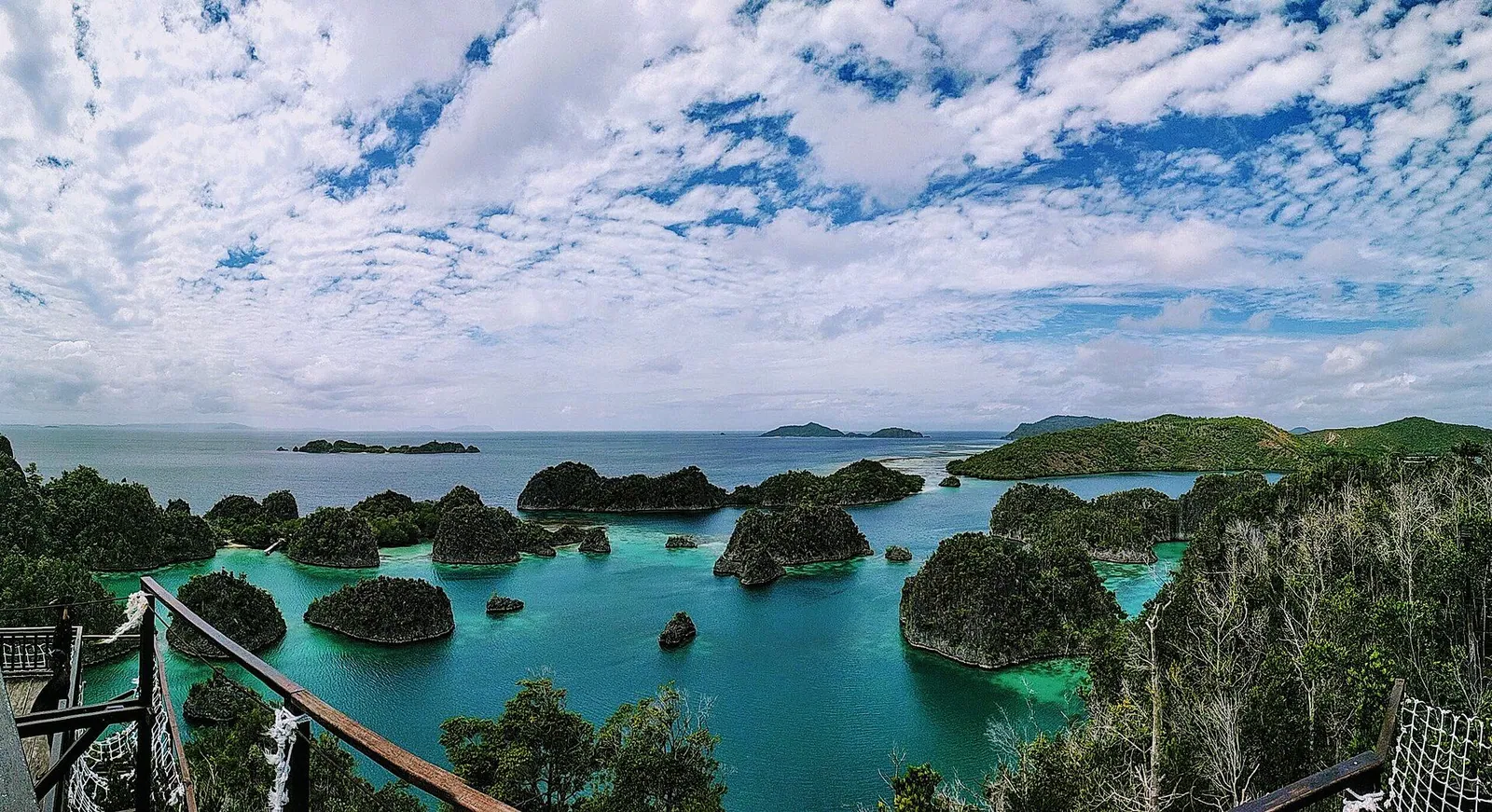
Indonesia mined an estimated 2.6 million tons of nickel in 2025, about two-thirds of the world's estimated 3.9 million tons, according to the US Geological Survey. It also holds an estimated 62 million tons of reserves, the largest of any country in the survey's table. In June 2025 the government revoked four nickel mining permits in Raja Ampat, a Southwest Papua archipelago that UNESCO recognises as a Global Geopark and a biosphere reserve, while keeping a fifth, held by a subsidiary of state miner PT Aneka Tambang Tbk (Antam).
That split decision, and the restart of the remaining mine three months later, is the clearest test so far of how Indonesia weighs its nickel ambitions against protected areas on small islands. Our issue profile is at Nickel mining in Raja Ampat.
A halt, then a decision
On 5 June 2025, Energy and Mineral Resources Minister Bahlil Lahadalia temporarily halted operations of PT Gag Nikel on Gag Island pending field verification, in response to public complaints about mining's effect on Raja Ampat's tourism areas, the ministry said in a press release. The minister said Raja Ampat had about five mining permits but only Gag Nikel was operating. The ministry said the results of the field verification would be made public.
On 10 June, after a limited meeting with President Prabowo Subianto, Bahlil announced that the president had decided to revoke four nickel mining business permits (IUP), Antara reported.
What the record shows
Revoked on 10 June 2025. The four permits belonged to PT Anugerah Surya Pratama, PT Nurham, PT Mulia Raymond Perkasa and PT Kawei Sejahtera Mining. The government said the companies did not meet environmental protection standards and breached rules on the governance of small islands and the protected Raja Ampat Geopark, Antara reported. Bahlil said the decision followed a comprehensive evaluation of environmental compliance.
Kept. PT Gag Nikel holds a contract of work, a different kind of licence, covering 13,136 hectares, according to the ministry. Bahlil said the ministry's evaluation found its mining complied with its environmental impact assessment (AMDAL) and that the site lies outside the geopark, about 40 kilometres from the Piaynemo viewpoint, Kontan reported. Of the roughly 13,000 hectares, 260 had been opened and 130 of those reclaimed, Kontan reported. Its approved 2025 work plan allowed 3 million wet metric tons of ore. The contract was signed in 1998 and production began in 2018.
Resumed on 3 September 2025. Tri Winarno, the ministry's director general of minerals and coal, told lawmakers that operations had restarted because a comprehensive environmental audit "must be carried out under operating conditions," Kontan reported. He said the decision involved several ministries, including the Ministry of Environment and the Ministry of Marine Affairs and Fisheries, and that the company had a green rating in the government's PROPER environmental performance programme. He said the president had asked for tighter oversight of the AMDAL and reclamation.
The revocations are government decisions. They are not court rulings, and the public statements did not set out each company's specific violations.
Why conservation status matters here
UNESCO designated Raja Ampat a Global Geopark in May 2023, Antara reported, and added it to its network of biosphere reserves on 27 September 2025, covering 13.5 million hectares, Mongabay reported. In an August 2025 document, UNESCO's advisory committee asked Indonesia for detailed information on concession locations and environmental impacts before approving the nomination, Mongabay reported.
The geopark boundary did real work in the June decision. The government cited the geopark when revoking the four permits, and cited Gag's location outside it when keeping the fifth. The designations themselves do not ban mining. The legal force comes from national rules, and the government has not published the full evaluation behind each decision.
Environmental groups dispute that Gag is harmless. A report by Auriga Nusantara and Earth Insight said Gag Nikel's operations "have already destroyed forest cover and damaged coral reefs," Mongabay reported, and Greenpeace Indonesia's Arie Rompas called for revoking all nickel permits that "continue to threaten" the area. These are the groups' assessments, not official findings. The ministry's position remains that Gag complies with its AMDAL.
What it means for the nickel industry
The revocations removed no current production. Gag was the only operating mine in Raja Ampat when the halt was ordered, according to the energy ministry.
Its significance is as a precedent. The government showed it will revoke nickel permits where they overlap a protected area on small islands, and it did so within days of public pressure. It also showed that a state-owned producer with a contract of work and a positive environmental rating can keep operating under supervision. Bahlil described Gag's assets as state assets that the government must watch closely, Kontan reported.
For buyers of Indonesian nickel, the case shows that permits in sensitive areas can be withdrawn after public pressure. The result of the Gag audit will indicate how high the bar is for a mine that stays.
What remains open
- The audit. The energy ministry has not published the results of the comprehensive environmental audit, or a date for it. It said in June 2025 that field verification results would be made public.
- The revoked companies. Public reporting reviewed for this article did not show whether any of the four companies has challenged its revocation in court, or what has happened to their concession areas.
- Damage claims. The Auriga and Earth Insight findings on forest and reef damage have not been tested by an official inquiry that has been made public.
- Other permits. It is not clear whether other mineral permits overlap the newly designated biosphere reserve.
What to watch
- Publication of the Gag Nikel audit and any conditions attached to its operations.
- Any legal challenge by the four companies whose permits were revoked.
- Whether UNESCO's periodic reviews of the geopark and biosphere reserve raise mining.
- Whether the government applies the same test to nickel permits on other small islands.
Officials named here are listed in our officials directory, and the companies' connections are mapped on the intelligence page.
Sources
- 1.US Geological Survey: Mineral Commodity Summaries 2026, Nickel, pubs.usgs.gov
- 2.Ministry of Energy and Mineral Resources: Kementerian ESDM hentikan sementara operasi PT Gag Nikel (Jun 2025), esdm.go.id
- 3.Antara: Pemerintah cabut 4 IUP di Raja Ampat, PT Gag Nikel masih beroperasi (Jun 2025), jogja.antaranews.com
- 4.Kontan: Ini alasan IUP tambang PT Gag Nikel tidak dicabut (Jun 2025), nasional.kontan.co.id
- 5.Kontan: PT Gag Nikel kembali beroperasi, ini penjelasan Kementerian ESDM (Sep 2025), industri.kontan.co.id
- 6.Antara: UNESCO tetapkan Kabupaten Raja Ampat sebagai Global Geopark (Sep 2023), papuatengah.antaranews.com
- 7.Mongabay: Just as Raja Ampat fetches UNESCO biosphere reserve title, nickel mining looms (Oct 2025), news.mongabay.com